
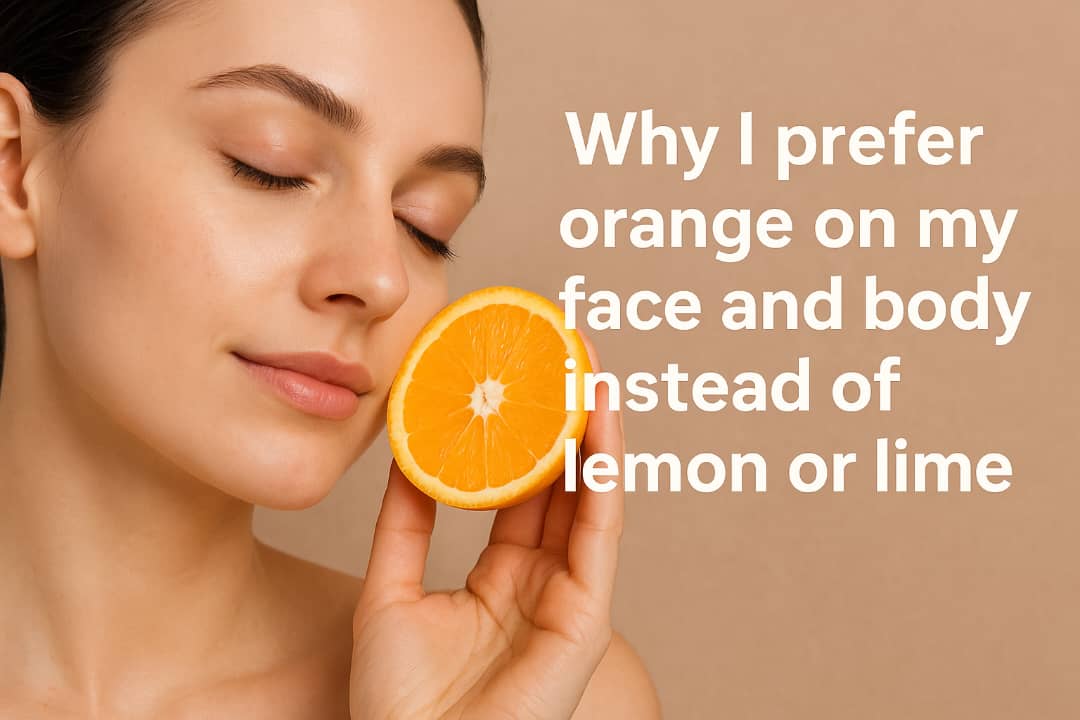

I will be honest. I prefer using orange on my face and body instead of lemon or lime. Orange feels milder. It smells sweeter. It does not sting the same way lemon or lime do. At the sink or in the shower I choose orange because it feels gentle on my skin and it is easier to tolerate every day.
The simple chemistry explains part of this feeling. Orange juice is less acidic than lemon or lime juice. Typical measurements put orange juice in a higher pH range than lemon and lime, which makes it less aggressively acidic on contact with skin.
Acidity matters for skin. The natural surface acidity of healthy skin sits around pH 4.5 to 5.5. Strong acids can disrupt the skin barrier and cause irritation, dryness, or chemical burns if used straight and left on for long periods. Lemon and lime juices tend to be much more acidic than orange juice and so they can cause stinging or redness on sensitive skin.
That is not the only difference among citrus fruits. Certain citrus oils and juices can increase sensitivity to sunlight in a condition called phytophotodermatitis. Some citrus species and preparations carry more of the compounds that cause this reaction than others. For example, oils or juices from some citrus peels can be phototoxic while others are much safer. This is one reason I am cautious about putting lemon or lime on parts of my skin that will see sunlight.
Despite those concerns, I still sometimes rub lemon on my armpits. There are two reasons. First, lemon has natural antibacterial properties that can reduce the bacteria that produce underarm odour. Second, the acid in lemon can temporarily brighten the surface of the skin and make the area look lighter to the eye. Both effects are why this trick has become popular online and why some people use it as a quick, inexpensive home remedy.
Here is the practical part. If you are going to try lemon on your underarms, do so carefully. Dermatologists and skin experts warn that lemon juice is not a proven or reliably safe method to lighten underarm skin. It can cause irritation and in some cases can make the problem worse by triggering inflammation or post inflammatory pigmentation. If fresh lemon juice is left on the skin and then exposed to sunlight it can lead to painful burns or darkening rather than lightening. For that reason I use lemon sparingly and only as a short, occasional treatment.
If you choose to experiment with lemon, follow precautions to reduce risk. Always do a patch test on a small area first. Dilute the lemon juice with water or a gentle carrier, do not leave it on for long, rinse thoroughly, and avoid direct sun on the treated area for several hours. If the skin becomes red, sore, or itchy, stop immediately and wash the area. Consider safer, dermatologist recommended alternatives for persistent underarm darkening such as gentle exfoliation, changing shaving or hair removal methods, using products designed to reduce irritation, or seeking professional treatment.
Why I still prefer orange comes back to comfort and a low risk of harm. Orange feels milder on my face. When I use orange based cleanses or scrubs I am less likely to get stinging or visible redness. Orange still gives a citrus scent and a little brightness without the sharp acid hit. For everyday use that calm, gentle feeling matters more to me than the slightly stronger astringent effects of lemon or lime.
In plain language, natural does not automatically mean safe. Just because something grows on a tree does not mean it is gentle on every part of your body. The skin under the arms is delicate, and the face is more delicate still. If you have persistent darkening under the arms, ongoing irritation, or any signs of allergic reaction, consult a qualified skin specialist rather than relying on internet hacks. Moderation and caution will keep your skin healthy while you experiment with simple, natural self care.