
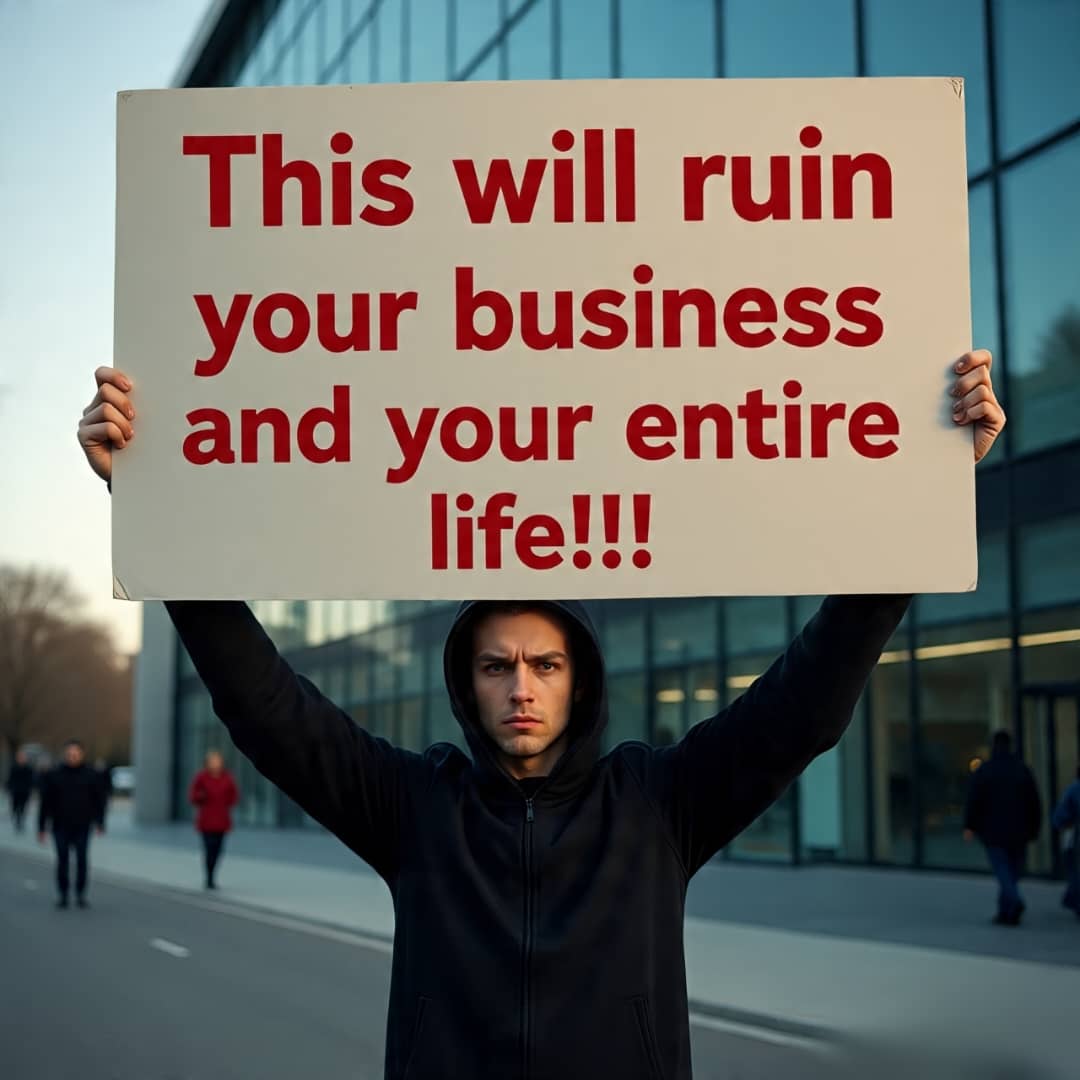

It isn’t lack of capital or investment that is stopping you from starting and running a successful business, it is these reasons that I’ll tell you shortly.
I have both a good news and a bad news…
The good news is that “everyone can run a business even if you think you can’t”.
The bad news is that “not everyone can run a business even when you think you can”.
I love the fact that you suddenly shook your head in disappointment lamenting that “I’m confused, contradicting my points and don’t know what I’m saying”, but be a little patient, because you will soon understand what all this is about.
In my good news, I stated that “everyone can run a business” and I 100% mean it.
Many people don’t embrace entrepreneurship because they believe it’s not meant for everyone, they believe that not everyone can succeed there.
But, who said so?
The problem is that people have the wrong mindset when it comes to starting a business, for example:
1) They believe that they don’t have any lucrative talent or skill and therefore have no product or service to offer to consumers.
2) They believe that they need lots of money before they can even begin. That’s why they end up waiting endlessly for loan, investors, grant, shareholders, etc.
3) They believe that they need a physical office/work space before they can start work.
The truth however is that, even if you want to sell coffee, lemonade or breakfast, you don’t need to rent an apartment first, you can do that as a start-up using methods you’ve always looked down on and never wanted to attempt using. For example, an umbrella, your own residence, your legs (mobile vendor).
If it’s a service that you intend to offer, then you’re in bigger luck thanks to technological advancements.
4) Waiting till they can afford to hire staff.
You can start your business alone. Most business ventures can hit off with just one person (you).
It not only reduces your expenses, but gives you more peace of mind knowing that in this early stage of your startup, no one is stealing your business fund and that you have only yourself and the business to worry about each day instead of trying to supervise and motivate a bunch of employees.
In the bad news part, “not everyone can carryout successful entrepreneurship”.
One reason being that “not everyone is willing to put in the necessary work and make the necessary sacrifices without slacking, hypocrisy or self-righteousness and ego justification”.
Another reason is that not everyone understands that you can start without all the paperwork and decoration.
Some people only want to go into business after they have registered a company, branded their goods and services, done a trademark and patent registration and built a skyscraper (i.e., gotten a real physical place of business).
None of this is wrong. But what if you can’t afford it yet? Will you keep waiting till you can? You might as well be watching yourself go broke and homeless.
In fact, loans have their risk. What if your startup doesn’t survive? I’m sure you already know the consequences.
The same is almost the issue with gathering money from investors and shareholders, if you make a mistake, you could be facing bankruptcy.
But if you use your own little money to at least initiate something to see how it’ll go, you could be saving yourself from a great deal of future financial problems.
A real business-minded person understands that a start-up can be initiated without any of these in the first place. You can start almost any business from your bedroom and kitchen, you just have to learn how.
If you don’t have even that little money to start at all, then you can consider business ideas which require zero capital, only your brain and sincerity. Yes, such business ideas exist, plenty of them, and many financially secure people you envy started this way.
One Mistake Business Owners Make Often:
HIRING FREQUENTLY USED EQUIPMENTS YOU CAN ALREADY AFFORD TO BUY.
This mistake costs you more money than you can imagine, especially if it’s an aspect of your business that you carryout often.
Let’s say a product costs ₦150,000 when bought.
But when hired, it costs ₦20,000 per hire, and you need to hire that equipment twice in a month.
That is ₦40,000 in a month.
That’s ₦480,000 in a year.
Do the calculation yourself, you’ll confirm that this amount is many times what you would have spent at once if you had just bought it.
It’s okay if you don’t have the money to buy, that could be a good excuse for hiring.
But if you can afford it, buy it once and for all. Big and small businesses are making this mistake generally.
ONE GOOD THING THAT RUINS A BUSINESS
1) Loan —Debt.
I don’t mean bankruptcy, I mean regular unpaid loan.
When you borrow to invest in your business and you delay payback. This is because you’ll be presenting a false financial image and networth of your business to the outside world.
They’ll think that you have more money than you actually do.
The problem is that this might paint delusional and false pictures of your business’s progress in your head and stop you from progressing in reality since you think you’re already successful thanks to the false numbers.
Most top businesses in the world are into this. Some never pay back the money they borrowed if they think they’re more powerful than the lender.
This backfires several years later. This is why many top businesses suddenly collapse.
A business built on such rocky foundation will one day fall, no matter how long it takes. You don’t want this to be your fate.
Therefore, the only right thing to do is to always pay off your debt as soon as you earn enough to do that. Stop waiting and fidgeting, you’ll hurt yourself and your business in the end.
Now to the main point of this post:
TWO MISTAKES THAT RUIN YOUR BUSINESS
1) Fear
This is one reason many businesses never get off the ground. The entrepreneur is often afraid of many factors. These fears may be justifiable, however, it doesn’t mean that you should allow the fears in your heart to prevail.
There is no business that is risk-free. Even the most successful businesses are not without risks even at their current stage.
I would love to tell you that there is a point in your business when the risk lessens, but sadly, that is not true. In fact, the bigger your business becomes, the more risks there will be. These risks may include something as regular as “competition” from similar brands.
So, tell me, are you going to windup just because of competitors when your business becomes the talk of the town?
Of course not.
Therefore, in the same way, don’t allow any business fears stop you from starting.
Types of Fears:
a) Fear of Success
No, this is not stupid, seriously. Even I had this fear before I ever started my first blog several years ago. My first ever blog was on Blogspot, I really can’t remember what happened with it though, I never took it serious because I was afraid.
The points I’m going to list here are some of the fears I’ve experienced so far.
—Popularity
My fears include having a popular social media account. I really can’t count how many accounts I’ve deleted so far, out of fear of people getting to know me.
The first paid website I registered was in 2020, after a while, I got scared and allowed it to expire.
Take note that in all my blogs, I have one promise:
To be real and not sound perfect or successful where I’m not.
You’re dealing with a real person, a human who makes the same mistakes you make and go through the same problems you experience.
I want to be relatable and sincere.
Above all, I want to save you from making the same mistakes I made, or the mistakes others make. I want YOU to succeed.
Seriously, the first time I started getting over my fears was in 2022 (this year). Before now, I’ve made so many mistakes that I’m too ashamed to discuss. But the beautiful thing is that I don’t make mistakes without learning from them. It is these lessons that I share on my blogs and Instagram pages.
Even as I write, I haven’t fully gotten over my fear of popularity, but I keep working with determination.
So I don’t want you to feel stupid, you’re not.
I just want you to be determined enough to start and persist despite your fears.
—Criticism
This is one thing that frightens me to the bones.
What if I or my business become popular and people don’t like what I offer?
What if I get lots of negative criticisms?
I know people will have different opinions regarding what I or anyone else does.
There is one truth though that keeps me going, that is:
Knowing that no matter how good something is, there’ll always be haters.
And no matter how bad something is, there’ll always be supporters.
Whenever I remember that, I’m reminded that there’ll definitely be people out there who’ll love what I do, and these people are those I should focus on and draw strength and purpose from.
Who knows? One day, haters may turn to lovers.
After all, haters sometimes help you grow your business and improve your personal self.
How? You might ask.
I’ve noticed that these people sometimes (though not all the time) do have good points and observations hidden in their mean words. It is left for you to figure out the truth surrounding their meanness and improve there. That way, you’ll only get better than your competitors and keep soaring higher and higher towards real success.
If you understand how to handle haters, you’ll not have much problems in business.
This is the difference between businesses with longevity and ones with short-lived success.
The businesses with longevity take note of the advice hidden behind mean words.
For example, if you wrote a book and someone complains that you never get to the point. How do you react?
Don’t lash out asking them if they can write a book themselves. Instead look at your work over again and see if truly you don’t get to the point without stressing people’s brains out.
This critique might be telling the truth, it doesn’t matter if they hate you or like you, or if they intend to help you or destroy you. Simply take the advise hidden in their hatred and make better future productions to shut them up.
Don’t reply harshly, and don’t languish in self-pity either. Just brave up and see if they have a point, it’s not a shame or a letdown, it’s actually good for business and self-improvement.
—Loss of Patronage
Sometimes I worry about what would happen if people who initially liked me and patronised me suddenly evaporate into thin air.
Then I realized that even though I value every single person who patronises me, I must also understand that I can’t decide when they’ll drop by next or when they’ll stop dropping by totally.
Business has a funny behaviour, sometimes it booms, sometimes it lacks. We must welcome each season.
Instead of focusing on whether I’ll lose patronage or not, I should simply focus on giving my best.
Let me tell you something, if you give the best among your contemporaries, your business will become like a circle, even those who leave will eventually find their way back to you because they don’t have a choice and can’t get your level of expertise elsewhere. Focus on making yourself this circle, instead of worrying.
—Constant Scrutiny
If you get successful and popular, you’ll be in public eye and attention. It’s inevitable, unless you never get to this level.
People will pay attention to you and watch your every step and move.
There are those who will adore you, but there are still those who will castigate you. Don’t hate or insult anyone, simply move yourself and your business gracefully to the next positive level.
Understand that it’s a big blessing for your brand that you’ve been finally noticed in the first place, and if you handle this well, it means more money and higher success.
—Competition
Of course, the moment this new brand begins to shake the industry, your competitors will be on their toes.
Even those who are yet to join your business sector will feel sceptical and worry if there’s still enough market for them because of your existence.
If anyone else wants to exist in your sector and outshine you, whether they’re an existing business or a start-up, they have to up their games and set high standards for their brand in order to get their fair share of the market.
Should this cause earthquake or landslide for your business? No!
Well, unless you’re overconfident enough to relax and think you’re unbeatable.
The stronger and more successful your business is, the better you should make your products and services.
Keep improving, never stop and never get comfortable. This is one easy way to thrive amidst competition.
Even as a fresh face in business, to be able to get a share of the market, you’ll have to prove that you deserve to be noticed by making yourself as unique and high-quality as possible.
It could even be as simple as being more polite and considerate with customers. You know it’s like a curse to successful brands, most big businesses forget how to be nice once they climb up the ladder, some are unapologetically rude and think nothing will happen no matter how they treat consumers.
But if you can make customers feel happy, seen, appreciated and satisfied, you’ll be making a positive difference in your sector and the big names won’t know what hit them.
b) Fear of Failure
In the (a) part, I talked about “fear of success”. To be honest, I also feel this”fear of failure”. One of the reasons I never kicked off my business in the past was because I was afraid of failing. I thought it’d be a shame to put in a lot of work and resources only to crash.
I was worried about so many things, and I’ve listed the top three fears people have when it comes to failing.
—Not being able to get off the ground
Sometimes I simply tell myself that I may not be capable of carrying out this job.
Sometimes I remind myself that I don’t have all the skills required for handling this business, for example; marketing skills.
Well, I won’t really say I don’t have marketing skills because I have been very successful there in the past with other people’s ventures. However, if I’m honest with myself, I’ll admit that I only feel ashamed of representing a brand which no one has heard of and which I’m not certain of it’s possible success.
I eventually understood that if I could do it for others, I can do it for myself too, and I have absolutely nothing to be ashamed of because it’s not easy to have a viable business idea in the first place. I also remind myself that I won’t stop until I succeed in getting this business off the ground, and even then, I’ll keep moving.
—Not delivering the best
Failing to fulfill customer’s expectations is really an awkward situation to be in, and I fear finding myself there. That’s why I often rejected any jobs that were challenging, I only focused on tasks that were easy for me to accomplish.
But I realised something… Doing this limited me from progressing and improving my skills.
When you accept challenging tasks, you grow in the process through the new experiences you’ll get.
Always be available to challenge yourself and put in your best.
—Afraid that you’re not ready
Building a successful business requires many things, time, money, determination, etc., and if you’re not ready to put in these resources, you may be setting yourself up for failure.
For the fact that I don’t have enough time to care for my startup right now and don’t have money to hire extra hands, I sometimes worry that I may not succeed.
But that is not true.
I realised that I only need to “restrategise” and use a plan that best suits my current situation.
I don’t need to postpone my start date, neither do I need to give up, I simply need to use new methods. This is what I believe you should also try.
2) Quiting
It’s no news that a good number of startups do not exceed the first three years of business before quitting.
Neither you nor I would want to join the statistics of those who give up and not finish what they started.
Below are two stages when businesses are most likely to give up.
a) Before you start
You may have been told that your idea is nonsense and would never get off the ground, or you’re scared that you won’t succeed, or whatever reason at all, you just dumped that business plan in the trash bin and decided to forget about it and not embarrass yourself.
You simply give up on a business that you haven’t even given a chance yet. This is what it means to give up even before you start.
b) When it gets rocky
Most businesses get off well, or maybe eventually get off despite obstacles, however, at a point, instead of stabilizing, it goes Titanic.
This is a crucial point when many business owners drop the pen and windup.
They fear that they may not be able to save the business, therefore there’s no need keeping it and wasting their time.
It even becomes more difficult to save a shaking business when investors pull out their cash and shareholders demand their shares and lenders come for debt recovery.
This is why raising capital from these financial means is very risky even when you’re ready to comply with their rules and demands.
I earlier talked about paying back your loan promptly, but what if your business sinks before you make enough money to pay back? Of course, lenders will still demand their money back when the time comes. That’s why you have to be very careful about loans. Even if you do take loans, try to pay back as soon as you can.
So, this is it! If you can avoid these mistakes and overcome these fears, you’re very much on your way to becoming a successful business owner and building a successful business/brand.
If you liked what you read, please, feel free to share (with credit), and visit our blog again to read similar articles.
We love you!
