

JudeEsq











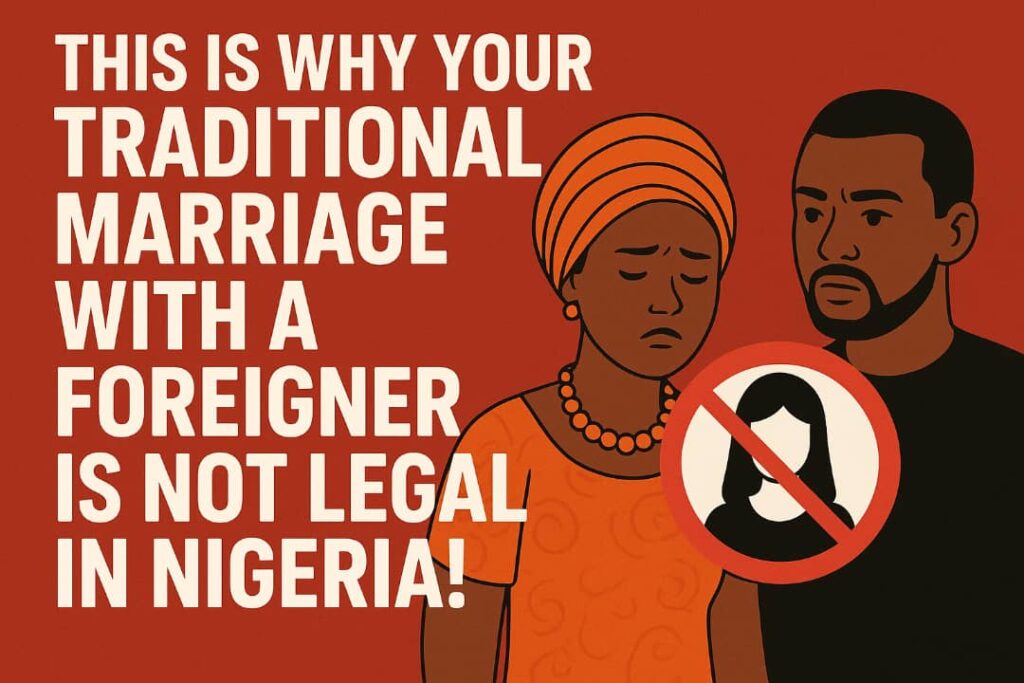








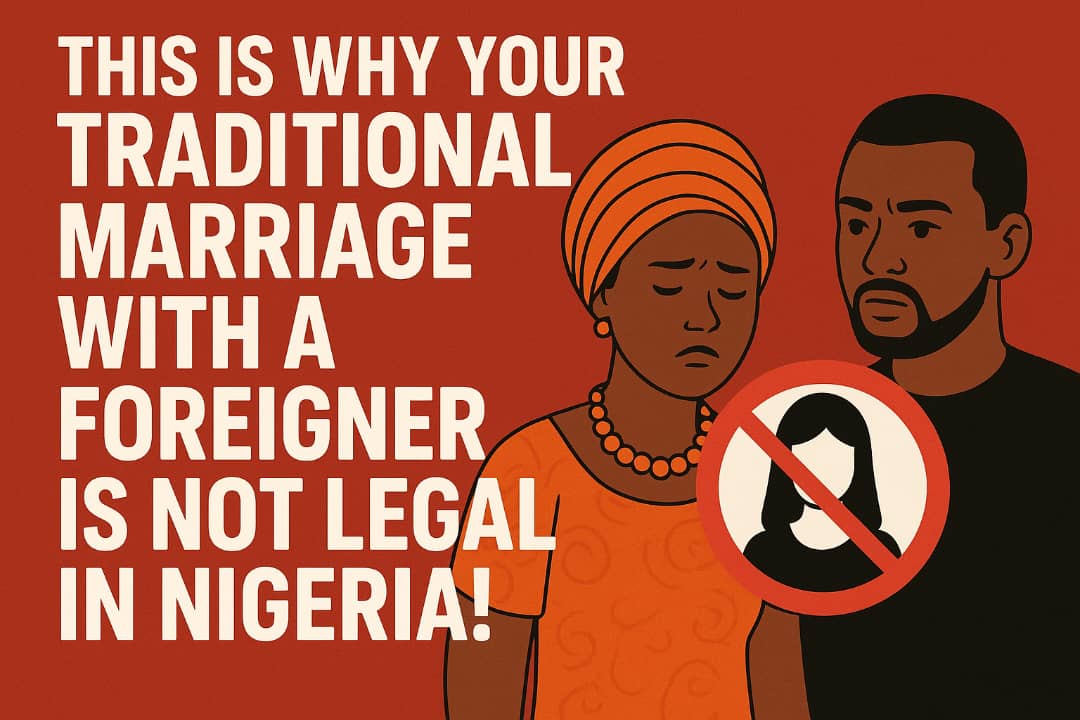
Many people fail to realise that customary marriages in Nigeria are not open to just anyone. Customary marriage law is not universal for all residents. It applies only to persons who are subject to or recognised under the relevant customary law.
In the landmark decisions Savage v Macfoy and Fonseca v Passman the courts held that a non-Nigerian (or non-native subject to Nigerian customary law) lacked the capacity to contract a valid customary marriage under Nigerian customary law.
In Savage v Macfoy a Sierra Leonean man resident in Lagos purported to marry a Yoruba girl under Yoruba customary rites. The court rejected the claim, ruling that he was not subject to customary law in Nigeria, and so had no capacity to enter a valid customary law marriage.
In Fonseca v Passman a Portuguese national sought to rely on Efik customary law. Once again the court held that he had no capacity to contract a customary marriage under Nigerian customary law.
The underlying legal reasoning is that customary law binds only those persons to whom that custom applies typically natives or persons recognised as part of the ethnic community. If one partner is not subject to that custom, the union is not a valid customary marriage.
As one legal text summarises: where a couple is composed of a native of Nigeria and a non-native, the customary law courts will generally treat such purported marriages as void.
Thus, if you, a Nigerian woman, marry a foreigner or any person not recognised under your custom, their “traditional wedding” may legally amount to nothing more than a social arrangement with no legal effect under customary law.
What this means for couples involving foreigners or non-natives
Even if the traditional rites are fully observed bride price paid, ceremonies held, family consent obtained the marriage may still be void if one partner lacks capacity under the custom.
The local community may treat the union as real. But the law may treat it as non-existent. That has serious implications for inheritance, legitimacy of children, recognition in marriage courts, and protection of rights that spouses ordinarily enjoy.
Children born from such unions may face difficulties in inheritance or succession if the customary marriage is challenged.
In the event of death, dissolution, or dispute, the non-contracting spouse may have no legal standing because the marriage would be treated as void the courts may refuse to grant rights typically afforded to spouses in valid marriages.
Because of these grave consequences, many Nigerian legal textbooks explicitly warn that “only Nigerians are subject to Nigerian customary law.” Hence, a customary law marriage between a Nigerian and a non-Nigerian is automatically void.
Why statutory marriage under the Marriage Act is the safest option
Given these risks, a statutory marriage under the Marriage Act offers clarity and legal strength.
The Marriage Act recognises marriages between consenting adults who satisfy the statutory requirements. It does not depend on tribal custom, ethnicity, or origin.
Once properly registered under the Act typically via a registrar or licensed marriage officer the marriage becomes legally valid, binding, and enforceable. The marriage certificate and registry entry serve as concrete evidence of marital status.
This means that even if one party is foreigner, or not subject to any Nigerian customary law, the statutory marriage creates a valid union under Nigerian law.
So if a foreigner or non-native wishes to marry a Nigerian, the statutory route is the only safe way to secure legal rights, recognition, legitimacy for children, protection under family law, and enforceable spousal obligations.
You can still celebrate tradition but secure legal protection first
Yes, you can still have your traditional wedding. You can pay bride price. You can dress in beautiful attire. You can uphold your culture, invite friends, dance, celebrate with family. There is nothing wrong with that culture matters.
But legally, these ceremonies alone may not give you any protection if your partner is not subject to the customary law.
Therefore, do not treat custom as a substitute for legal security. If you want to protect your future inheritance, children, marital rights, legitimacy, divorce rights you must ensure that the statutory marriage has been done or at least initiated before or immediately after the customary rites.
If you skip the statutory registration you may end up with memories, but no legal protection. The law will treat you as if you never married. And in disputable moments the courts will say: you are on your own.
Ignorance of the law is not an excuse.
Many people in Nigeria even after years of being together, having children, holding big ceremonies discover too late that their union has no legal backing. When the husband dies, remarries, or abandons them, they find that customary recognition alone cannot save them. Their children may face problems with inheritance. Widows may lose property. Spouses may have no claim in court.
If one partner is not subject to the custom that purportedly binds you, the customary union is legally fragile, if not void altogether.
Do not gamble with your future on ceremonies or goodwill. Protect your rights with statutory marriage documented, registered, recognised. That is the surest way to secure your future.
