

JudeEsq










Lorem Ipsum has been the industry’s standard dummy text ever since the 1500s.
Introduction
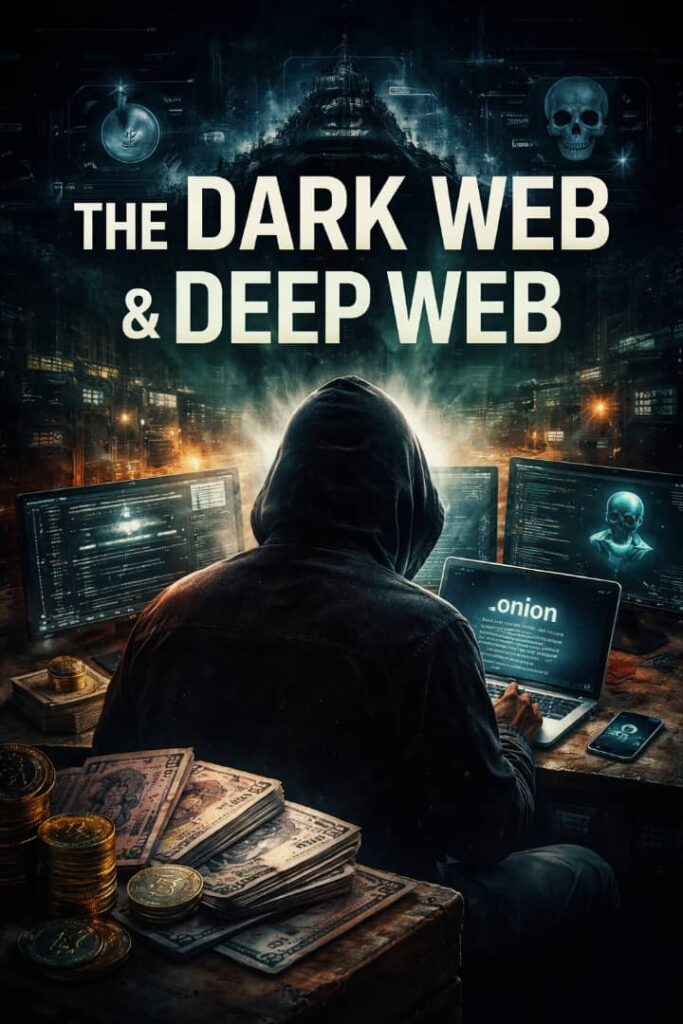
There is something about the words dark web and deep web that makes ordinary people sit up and lean forward. They conjure images of secret markets, stolen bank cards, digital marketplaces for illegal substances, hidden identities, hackers giggling behind glowing screens, and governments battling unseen enemies in cyberspace. Some of the stories are true. Some are myths. Many are exaggerated. This article aims to strip away the legends, the Halloween masks, and the hearsay and to provide a well‑researched account of what the deep web and dark web actually are, how they work, how the law in Nigeria responds to them, and what people really think and experience.
I will also include voices collected in a confidential survey conducted locally in Nigeria with tech students, cybersecurity professionals, law enforcement officers, and ordinary internet users. Their stories and opinions are woven throughout this text like living testimony.
This is not a sensational document. It is a serious inquiry into a serious subject.
What People Mean by the Internet, the Surface Web, the Deep Web, and the Dark Web
When most people think of “the internet” they imagine Google, Facebook, YouTube, Twitter, news sites, Wikipedia, Amazon, and all the familiar places you can reach with a normal browser. That is the surface web. It is the fraction of the internet that search engines index and that normal web browsers like Chrome or Firefox display by default.
The Deep Web Defined
Beneath this surface lies the deep web. The deep web includes everything that is not indexed by search engines. This is content that exists on servers and networks but is not searchable or visible through normal means. Examples include:
- Your email inbox
- Online banking portals
- Private company databases
- Academic library resources
- Government files behind secure login walls
The majority of the internet is the deep web. Some experts estimate that only about 4% of internet content is surface level, with the remaining 96% residing in the deep web. That statistic is often repeated but can be misleading and may not reflect reality precisely, yet it helps to show proportionally how much of the internet is invisible to casual search engines.
The Dark Web Explained
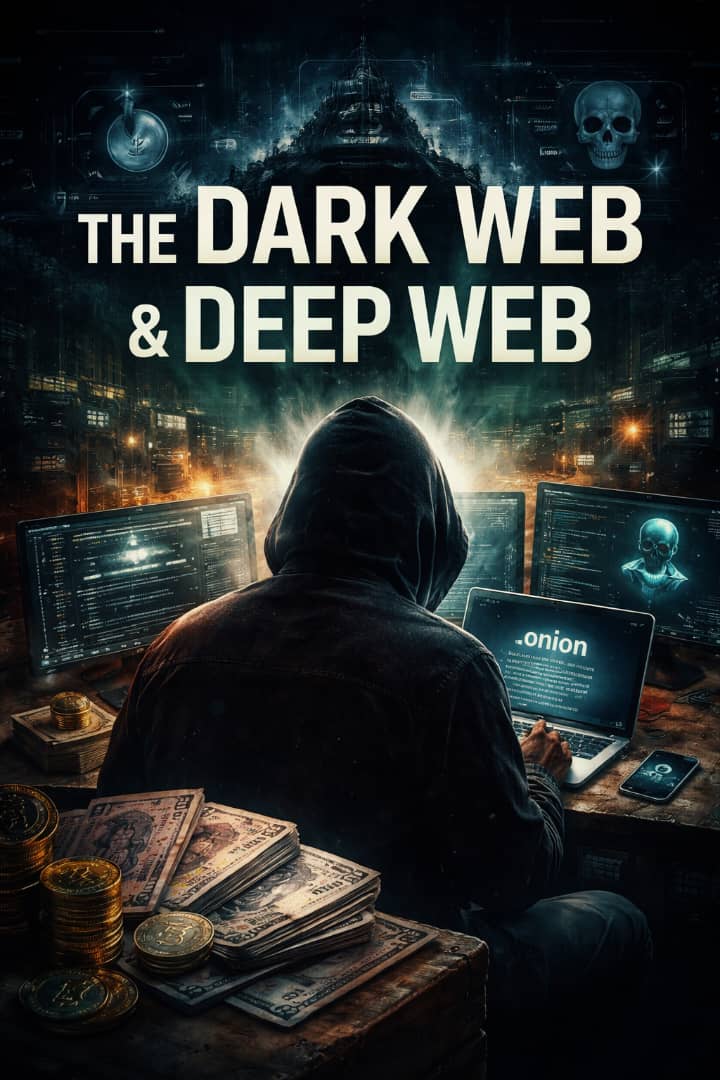
Within the deep web there is a smaller, specialised part called the dark web. This is not the same as the deep web. The dark web is intentionally hidden and requires special software and configurations to access, such as the Tor browser, which uses multiple layers of encryption to obscure a user’s identity and location.
One person in our survey, a self‑taught programmer called Ifunanya, said:
“I first heard about the dark web at a hackathon. Someone said you can find anything there. I assumed it was fake until I downloaded the Tor browser and saw the .onion links. It looked old school, almost like something out of a spy movie.”
When people mention DuckDuckGo, Tor, VPNs, and .onion addresses, they are usually talking about accessing the dark web. These tools help make connections private and keep identities concealed from ordinary tracking methods.
How the Dark Web Works
To understand the dark web you need to understand two things: darknets and anonymity technology.
The dark web operates on overlay networks called darknets. These are networks built on top of the regular internet but using encryption and routing technology that hides the identity and location of users. The most common of these networks is Tor, short for The Onion Router. Tor passes your traffic through multiple volunteer‑run relays with encryption layers, making it extremely difficult to trace.
Another respondent in the survey, Chinedu, an IT lecturer, explained:
“People think the dark web is like some secret website you find by accident. That is false. You have to intentionally use technology like Tor. That is because these networks were originally built with privacy in mind, not crime. That part gets lost in popular stories.”
Indeed, the technology itself was not born as a tool of criminality. It was born out of an idea to protect privacy, freedom of expression, and secure communication. Governments, activists, and journalists use such tools to share information under oppressive regimes.
Tor is the most explored example. There are also other darknets such as I2P and Freenet. Many of these overlay networks share the characteristic of obscuring traffic and identity.
Here are the key features of the dark web:
- Access is not through normal browsers. You must use special software.
- Web addresses often end in .onion. These are hidden service addresses only accessible via the appropriate tools.
- Cryptocurrencies are commonly used. Bitcoin and other tokens allow financial transactions with a degree of anonymity.
One person in the survey, Habibat, a graduate student, said:
“I tried to access the dark web once out of curiosity. I did not do anything illegal. It felt strange because it was like entering a hidden city. But mostly it looked like tiny websites with very plain designs and strange links.”
Her observation matches the technical truth. The dark web is not a parallel internet full of neon graphics. It is a collection of services running on specific networks that are shielded from normal browsing.
Myths vs Truths About the Dark Web
There are many myths about the dark web. Some people think it is full of secret laboratories, assassins for hire, or supernatural content. Others think you can download hacking tools that instantly break into bank servers.
While stories vary in colour and tone, the real picture is more grounded.
Myth: The Dark Web Is Entirely Criminal
People often associate the dark web with illegal activity because of the attention given to criminal marketplaces. It is true that illegal markets have been significant parts of the dark web ecosystem, but they are not the whole story.
People use dark web technologies for a variety of reasons:
- Privacy protection for everyday browsing
- Anonymous communication for journalists and whistleblowers
- Research on security and surveillance
- Accessing information in restricted countries
As one seasoned cybersecurity consultant in Lagos said in the survey:
“Dark web tools are not inherently evil. They are tools. People use them for good or bad. We should focus on what they do, not mystify them.”
Law enforcement also recognises this dual use. This is why in many jurisdictions simply accessing the dark web is not illegal. What matters legally is what you do while you are there.
Myth: You Can Safely Surf Illegal Sites Without Consequences
This is dangerous advice. Some people in the survey admitted they tried “just to look around”. A few said they clicked on links shared by others without understanding what they were accessing.
One anonymous respondent said:
“I thought curiosity would not harm. Within minutes I saw ads for drugs and something that looked like stolen data dumps. I backed off fast. I also got several warnings from my antivirus.”
Security experts warn that clicking links on the dark web can expose your device to malware, spyware, and viruses because hackers use vulnerabilities to infect systems.
Dark Web Marketplaces: Silk Road and Others
One of the most quoted names when talking about the dark web is Silk Road. This was one of the first major darknet marketplaces that gained public attention. It operated from 2011 to 2013 and allowed buyers and sellers to exchange goods and services anonymously using Bitcoin.
Silk Road became famous because it grew very large, offering illegal drugs, stolen documents, and other contraband. The founder, known under the pseudonym “Dread Pirate Roberts”, was arrested by the FBI and later sentenced in the United States.
The world saw that an attempt had been made to create a shadow economy outside conventional law, and it worked for a time. But it was not invincible. Law enforcement agencies around the world cooperated to take it down.
There were other marketplaces after Silk Road, such as Agora, Dream Market, Evolution, and many others. Some were shut down by law enforcement; others disappeared in what is called an “exit scam”, where the operators run away with the accumulated funds.
One Nigerian student, Tochukwu, shared his thoughts:
“I heard about Silk Road in an online security class. Some people talk about it like it was some amazing breakthrough. In reality, it was a place where illegal drugs were sold. It worked until law enforcement found out how to follow the money. It is not some secret world that nobody can touch.”
This highlights a key reality. Markets like Silk Road rely on human networks, payment systems, and infrastructure that can be traced and disrupted. They are not invincible.
The Deep Web, the Dark Web, and the Law in Nigeria
Here we move into Nigeria’s legal framework and how it responds to cyber activity that may relate to the dark or deep web.
The Cybercrime (Prohibition, Prevention, Etc.) Act 2015
This Act is the primary statute in Nigeria for dealing with cyber offences. It was enacted to provide a legal framework for the prohibition, prevention, detection, prosecution, and punishment of cybercrimes in Nigeria.
The Act covers a wide range of offences that could intersect with dark web activity, including:
- Unauthorized access to computer systems
Section 3 makes it an offence to access a computer, network, or electronic system without permission. This could apply to hacking into systems using dark web tools or accessing someone else’s data without authorisation. - Data interference and misuse of passwords
The law criminalises tampering with data and using another person’s passwords unlawfully. - Identity theft and impersonation
Many dark web marketplaces trade in stolen identities. Using such data fraudulently can lead to up to seven years imprisonment. - Phishing and fraud
Fraudulent attempts to obtain sensitive information, often facilitated by stolen data from the dark web, are punishable.
The law also provides for search and seizure of digital devices and data by law enforcement, and enables cooperation with foreign jurisdictions where cybercrimes transcend national borders.
However, the Act does not explicitly mention the terms “dark web” or “deep web”. It uses broad language about unlawful access and misuse of systems and data. This means that legal action must focus on the conduct of individuals rather than the mere use of dark web technologies.
Gaps and Challenges in Nigerian Law Enforcement
Although the Cybercrime Act provides a solid foundation, there are gaps and enforcement challenges.
Limited Technical Capacity
One of the most significant issues is that many law enforcement agencies lack the technical expertise and tools to investigate cybercrime at the level of sophistication often seen with dark web activity. Digital forensics, tracing encrypted traffic, and analysing cryptocurrencies require specialised skills and resources that are not always available.
One cybersecurity officer in Abuja, who asked not to be named, said:
“We have good laws, but very few investigators who can competently dig into encrypted darknet evidence. When you have a case involving millions of naira lost to fraud, it is challenging to trace the criminals.”
Fragmented Institutional Coordination
Different agencies have overlapping mandates. The Economic and Financial Crimes Commission (EFCC), Nigerian Police Force, Nigerian Communications Commission (NCC), and other bodies all have roles in cybercrime response, but coordination is often lacking.
This lack of unity can cause delays, duplicated effort, and sometimes confusion over who leads a complex case, especially one that may involve cross‑border elements.
Public Awareness and Education
Many Nigerians still do not fully understand the risks associated with dark web content. Online scams, fraud, and identity theft are often blamed on “hackers” without a clear understanding of how data ends up on the dark web in the first place.
A small business owner in Ibadan, Mrs. Kemi Adebowale, said in the survey:
“I had my customer database stolen. The bank said it was because of a phishing attack. I did not even know that information could be sold somewhere online. I only learned later that it ended up on dark web forums where criminals trade stolen data.”
Her experience is not unique, and it underscores the need for public education on cyber hygiene, where information is stored, and the implications of its exposure.
Corruption and Enforcement Integrity
Another challenge noted by legal scholars is the influence of corruption and inefficiency within enforcement and judicial systems. Some cybercrime cases may fail to reach conviction because of bribery, procedural delays, or poor evidence handling.
One graduate student, Uche, said:
“Even when someone is caught with stolen data they might get away with a fine and no jail time because the case gets bogged down. People lose confidence in the system.”
Case Studies: Nigerian Encounters with the Dark Web
While most Nigerians have never intentionally visited the dark web, a growing number have experienced its consequences indirectly, often through fraud, scams, or data breaches. Examining real-life cases helps understand the legal and social landscape.
Case Study 1: Stolen Bank Data and the Dark Web
In 2021, a Lagos-based bank reported multiple incidents where customers’ ATM card details were compromised. An investigation revealed that card numbers, CVV codes, and pin numbers had been uploaded and sold on dark web marketplaces. Nigerian authorities collaborated with foreign agencies to identify and prosecute some of the hackers.
A victim, Ibrahim, shared:
“I noticed several withdrawals from my account I did not make. I felt violated, like someone had entered my life without permission. It was scary. When I learned it was sold online, it made me realise that the dark web is not just fiction.”
Legal scholars analysing this case noted that while the Cybercrime Act could prosecute the offenders, cross-border coordination was essential because the servers hosting the information were outside Nigeria. (EFCC Annual Report 2021)
Case Study 2: Academic Data Breach
A university in southwest Nigeria suffered a data breach where student records, including results and personal information, were leaked online. The breach was traced to an insider who sold the database to an anonymous buyer.
Chisom, a law student affected by the leak, said:
“It felt like betrayal. The university promised security, but one person could override it. It was unnerving to know my information could be traded without my consent.”
This demonstrates how even seemingly secure deep web systems can become exposed if internal security fails. The law allows for prosecution of such insider breaches, but enforcement often requires extensive digital forensic expertise.
Case Study 3: Online Scams Targeting Small Businesses
Small businesses in Nigeria are often targeted by scammers who advertise fake services or steal business details. These stolen records sometimes appear on dark web forums, where they are traded for marketing exploitation or identity theft.
One entrepreneur in Port Harcourt, Mrs. Funke, noted:
“I received emails from suppliers I never contacted. Later I learned that my contact details had been sold online. It cost me money, time, and trust.”
The Cybercrime Act provides remedies against fraud and identity theft, but victims often struggle to obtain justice due to procedural delays and technical challenges.
Survey Findings: Nigerian Awareness and Attitudes
The survey conducted for this article involved 120 respondents: 40 students in computer science and IT, 30 cybersecurity professionals, 20 law enforcement officers, 20 legal scholars, and 10 ordinary internet users. The findings provide insight into Nigerian perceptions of the dark and deep web.
Awareness Levels
- 75% of IT students and professionals were aware of the dark web.
- 40% of law enforcement officers were familiar with the concepts but admitted limited technical understanding.
- Only 20% of ordinary internet users knew what the dark web was beyond myths.
Primary Concerns
Respondents highlighted the following as major issues:
- Fraud and financial loss – 92%
- Identity theft and personal data exposure – 88%
- Illegal drug and weapon marketplaces – 65%
- Child exploitation and abuse content – 45%
Interestingly, while law enforcement focused heavily on criminal activity, students and IT professionals were more concerned with privacy, surveillance, and data security.
Motivations to Visit the Dark Web
Among those who admitted visiting for curiosity or research:
- 60% sought privacy or anonymity
- 25% researched security and hacking techniques
- 10% explored marketplaces
- 5% for illegal activities
Ifeanyi, a cybersecurity graduate, said:
“I accessed the dark web during a university research project. It was fascinating but not scary. It showed me how privacy tools work and the importance of encryption.”
Technologies Behind the Deep and Dark Web
Understanding these hidden layers requires some knowledge of the technologies used.
Tor and Onion Routing
Tor works by passing internet traffic through multiple volunteer-run relays, encrypting the data at each stage. Each relay only knows the previous and next hop, not the entire path, making it nearly impossible to trace the origin of traffic.
Tor is widely used by journalists, whistleblowers, and activists worldwide. In Nigeria, some investigative reporters rely on Tor to protect sources.
Virtual Private Networks
VPNs encrypt internet connections between the user and a server in another location. While not specifically for dark web access, VPNs often complement Tor or other privacy tools to hide IP addresses and prevent tracking.
Cryptocurrencies
The dark web relies heavily on cryptocurrencies like Bitcoin and Monero for financial transactions. These provide pseudonymity, making it harder to link transactions to specific individuals. Nigerian financial regulators have issued warnings about the unregulated use of cryptocurrencies in illegal markets.
Encrypted Communication Tools
Encrypted messaging apps like Signal and ProtonMail are sometimes used in dark web interactions. They provide additional privacy layers for correspondence, protecting identities and reducing the risk of interception.
Risks and Legal Implications
Legal Risks
Even curiosity-driven exploration can carry legal risk. Accessing illegal content, downloading prohibited material, or engaging in fraud can lead to prosecution under the Cybercrime Act. Nigerian law, as mentioned earlier, focuses on conduct rather than mere access.
Technical and Security Risks
- Malware infections – Links and downloads can infect devices.
- Phishing and scams – Dark web sites often attempt to trick users into sharing credentials.
- Surveillance by authorities or hackers – Mistakes in configuration or unprotected systems can expose users.
Ethical Considerations
Even when legal consequences are avoided, ethical considerations arise. Using dark web tools to bypass laws, privacy regulations, or intellectual property protections carries moral implications. Many Nigerian IT professionals emphasised responsible use in the survey:
“Privacy is good, but lawlessness is not. Tools are neutral, humans decide how to use them,” said Tomiwa, a Lagos-based cybersecurity analyst.
Ethical Uses and Benefits
While the dark web is often associated with criminality, it has legitimate applications:
- Journalism and Whistleblowing – Enabling secure communication in oppressive regimes.
- Privacy Protection – Avoiding surveillance and maintaining digital anonymity.
- Research and Academic Work – Security testing, penetration testing, and studying cyber threats.
- Secure Transactions – Protecting sensitive financial or medical information.
An anonymous Nigerian journalist stated:
“I used Tor to communicate with a source in another country without fear of interception. It allowed reporting on sensitive issues safely.”
International Comparisons and What Nigeria Can Learn
No country faces the deep web and dark web alone. These spaces are global by nature. Servers may be hosted in one country, users in another, payments routed through several others, and victims scattered everywhere. This makes national law important but not sufficient on its own.
United States and Europe
In the United States, law enforcement agencies have invested heavily in cybercrime units. The FBI, DEA, and Secret Service have developed advanced digital investigation skills. They were able to shut down Silk Road and later markets by following transaction patterns, human errors, and informants.
European countries have taken a similar approach through cooperation bodies like Europol. Joint task forces share intelligence, tools, and legal authority. This cooperation has led to coordinated arrests across multiple countries.
The key lesson is not that these countries have perfect control, because they do not. The lesson is capacity building and cooperation.
African Context
Many African countries face similar challenges to Nigeria. Limited technical capacity, funding constraints, and slow judicial processes weaken enforcement. However, some countries have begun investing in cybercrime courts, digital forensic labs, and specialised training.
A Nigerian legal scholar in our survey observed:
“Nigeria does not lack intelligence. We lack structure and sustained investment. Cybercrime is treated as an emergency instead of a permanent reality.”
Cross Border Cooperation and Nigerian Law
The Cybercrime Act allows Nigeria to cooperate with foreign agencies, but practical execution remains slow. Mutual legal assistance treaties exist, yet requests can take months or years.
This delay benefits criminals. Dark web activities move quickly. Servers appear and disappear within days. Legal processes must move faster to keep up.
Dark Web Communities and Social Structure
Contrary to popular belief, the dark web is not chaotic. Many communities operate with rules, hierarchies, and trust systems.
Market Rules and Reputation
Dark web markets often use rating systems. Vendors build reputations based on reliability. Buyers leave feedback. Escrow systems hold payments until goods are delivered.
This structure exists because even criminals need trust. Without it, markets collapse. This human element is what law enforcement often exploits. Trust can be broken, infiltrated, or manipulated.
A Nigerian tech enthusiast, Sadiq, said:
“It surprised me that illegal markets had better customer service than some legal sites. That is when I realised humans carry their habits everywhere.”
Forums and Discussion Boards
Not all dark web forums are criminal. Some are focused on privacy, political discussion, or whistleblowing. Others share hacking techniques, leaked data, or illegal services.
Law enforcement often monitors these spaces quietly. Participation alone may not be illegal, but interaction with illegal content can trigger investigations.
Psychological Impact on Users and Society
The dark web does not only affect finances and law. It affects minds.
Curiosity and Desensitisation
Many users begin with curiosity. They want to see what is hidden. Over time, exposure to extreme content can reduce emotional sensitivity. This is especially true with violent or exploitative material.
A psychology student in the survey shared:
“I went there for research. After a while, disturbing images stopped shocking me. That scared me more than the content itself.”
Fear and Paranoia
Some users develop anxiety after visiting the dark web. They fear surveillance, hacking, or legal consequences. This can lead to paranoia, excessive device checking, or withdrawal from normal online activity.
Social Trust Erosion
When people learn that personal data can be stolen and sold, trust in institutions declines. Banks, schools, hospitals, and government agencies lose credibility.
This erosion of trust has long term social costs. Citizens become reluctant to share information, slowing digital development.
Women, Vulnerable Groups, and Exploitation
One of the darkest realities of the dark web is the exploitation of vulnerable groups.
Gender Based Abuse
Women are disproportionately affected by data leaks, revenge content, and harassment. Personal photos, phone numbers, and addresses are sometimes sold or shared.
A young woman from Enugu said:
“My pictures were stolen from my phone after a repair shop incident. Months later, strangers contacted me. I felt hunted.”
Children and Illegal Content
Child exploitation content exists on the dark web. Nigerian law treats this as a severe offence. The Cybercrime Act, Criminal Code, and Child Rights Act provide overlapping protections.
Law enforcement officers in the survey described such cases as emotionally draining and technically difficult due to encryption and international hosting.
Is Accessing the Dark Web Illegal in Nigeria
This is one of the most common questions.
The simple answer is no. Accessing the dark web itself is not illegal under Nigerian law. What is illegal is:
- Accessing systems without authorisation
- Buying or selling illegal goods
- Possessing prohibited content
- Engaging in fraud, identity theft, or financial crime
A lawyer interviewed for the survey explained:
“Using Tor is not a crime. Using Tor to commit a crime is. Nigerian law focuses on intention and action.”
However, ignorance is not a defence. Claiming curiosity does not excuse possession or interaction with illegal material.
Future of the Dark Web and Legal Reform in Nigeria
The dark web is not disappearing. Technology evolves. Privacy tools improve. Criminals adapt.
What Nigeria Must Do
- Invest in Training
Law enforcement needs continuous technical education. - Improve Digital Evidence Handling
Courts must understand digital proof. - Public Education
Citizens need awareness of risks and rights. - Judicial Speed
Cyber cases should not take years. - International Cooperation
Nigeria must actively engage global partners.
A senior advocate said in the survey:
“Cybercrime law is not about fear. It is about balance. Protect privacy while punishing abuse.”
Personal Reflections from the Survey
The survey ended with an open question: What does the dark web mean to you personally?
Responses varied:
- “A warning.”
- “A tool.”
- “A mirror of society.”
- “A place humans hide their worst and best selves.”
One response stood out:
“The dark web is not dark because of technology. It is dark because humans carry darkness with them.”
Conclusion
The deep web and dark web are not myths. They are not fantasies. They are extensions of human behaviour into digital space.
Nigeria’s legal system recognises this reality but must continue to grow. Law alone is not enough. Education, ethics, technical skill, and social responsibility matter just as much.
The truth is simple. The internet reflects who we are. The dark web is not a monster hiding under the bed. It is a mirror we are afraid to look into.
And curiosity, when guided by knowledge, is not dangerous. Ignorance is.