

JudeEsq













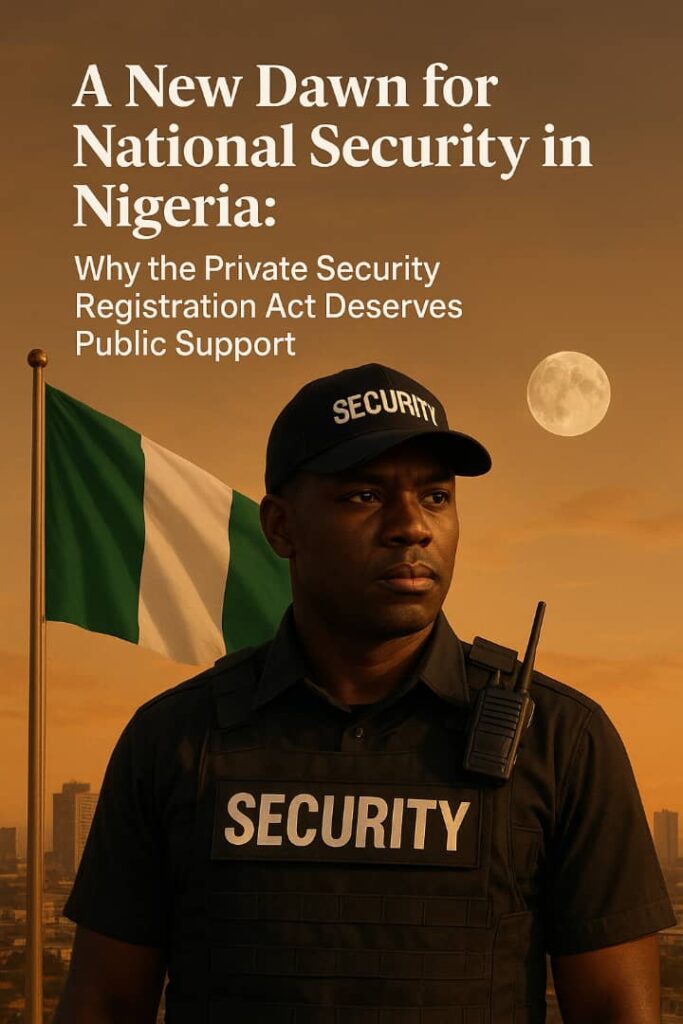













Nigeria stands at a historic moment in its approach to national security. The proposed Private Security Registration Act sponsored by Senator Prince Ned Munir Nwoko offers a structured and lawful path for private security companies to support the military in defending the territory of our great nation. This bill recognises a truth that has become increasingly clear across modern democracies. National defence is no longer the exclusive burden of the armed forces alone. Strong and well regulated collaboration between government forces and private security institutions can deliver a safer environment for citizens, investors and communities.
For many years security challenges in Nigeria have stretched the military and police beyond traditional expectations. From insurgency to banditry and organised crime, the nation has witnessed security threats evolve faster than government resources. This bill provides a welcome response grounded in law and accountability. It replaces informal arrangements with a transparent structure where every private security company will be registered, monitored and licensed for specific duties.
The creation of the Nigerian Private Security Registration Council is one of the strongest aspects of this legislation. The composition of the Council reflects a wise balance of authority and expertise. It includes the National Security Adviser as Chair, the Chief of Defence Staff, the Inspector General of Police, the Attorney General, and other respected leaders with deep knowledge of defence and international humanitarian law. This gives confidence that licensing decisions will be guided by legal standards, security professionalism and the interest of the nation.
The goals of the Act are clear. It provides a system to determine what services may be entrusted to private security companies. It protects the public by preventing abuse of armed authority and it ensures compliance with global humanitarian standards. It seeks to expand the capacity for the protection of lives and property without placing an overwhelming burden on the military or police. It promotes transparency by requiring public disclosure of the activities and regulation of private security companies.
There are also strong accountability provisions. The Council is required to keep a comprehensive database of private security operators. Licences can be renewed or revoked whenever necessary. Clear rules will govern the conditions under which private companies may bear arms. There will be rigorous supervision of staff qualifications and operational capacity. This is crucial because security work cannot be entrusted to untrained or irresponsible individuals.
It is also commendable that the Council will maintain proper accounts, submit audited reports and periodically brief both the President and the National Assembly. Such oversight prevents corruption, protects national security information and promotes public trust. Likewise, the jurisdiction of the Federal High Court over disputes and offences arising from the Act affirms that all private security activities remain within the authority of the state and the Constitution.
Recognising possible concerns and how the bill addresses them
No legal framework is without potential risks. Critics may worry about the possible misuse of force by private actors, the risk of conflicts of interest or a future situation where private companies become too powerful. These are valid concerns that have been observed in other nations, particularly where oversight is weak.
However, this bill offers strong safeguards. For example:
- • Any private entity found operating without a licence will face strict criminal sanctions including the possibility of corporate winding up and imprisonment for responsible officers.
- • The Act separates private security companies from mercenary activity which has been condemned under international law.
- • Strict qualifications and background requirements for Council members reduce the possibility of politically motivated licensing.
- • Rules on revocation of licences allow for rapid intervention if a company acts improperly.
- • The prohibition on activities without clear authorisation prevents private armies from rising outside state control.
These measures can be strengthened further through continuous review once implementation begins. Mechanisms for citizen complaints and external monitoring could enhance transparency. Regular training and certification requirements could ensure constant respect for human rights in operations. Collaboration with civil society could promote accountability at the local level.
Why Nigeria needs this law now
The presence of private security is not a new phenomenon in Nigeria. Businesses, estates and individuals have long relied on private guards. The difference today is the scale and complexity of threats. We must adapt. A structured legal regime that brings private security into a transparent national system will support the armed forces and help restore safety in troubled regions.
Security is the foundation of every dream a country hopes to achieve. It determines whether children can attend school, whether farmers can work their land without fear, whether investors can build industries that support our economy. The Private Security Registration Act brings Nigeria one step closer to that secure and prosperous future.
It is not a replacement for the military. It is a reinforcement. It is a legal recognition that every additional layer of protection matters when lives are at stake.
With thoughtful implementation, this bill can deliver a lasting positive change for national defence. It empowers the government to regulate private involvement in security with clarity and responsibility. It expands professional capacity where the nation needs it most. It protects the rights and safety of citizens. Most importantly, it ensures that the defence of Nigeria remains firmly under lawful authority.
For these reasons, the Private Security Registration Act deserves the support of all who believe in a safer and better Nigeria. It is a step forward in our collective effort to build a nation where peace is not just hoped for but actively secured.