

JudeEsq





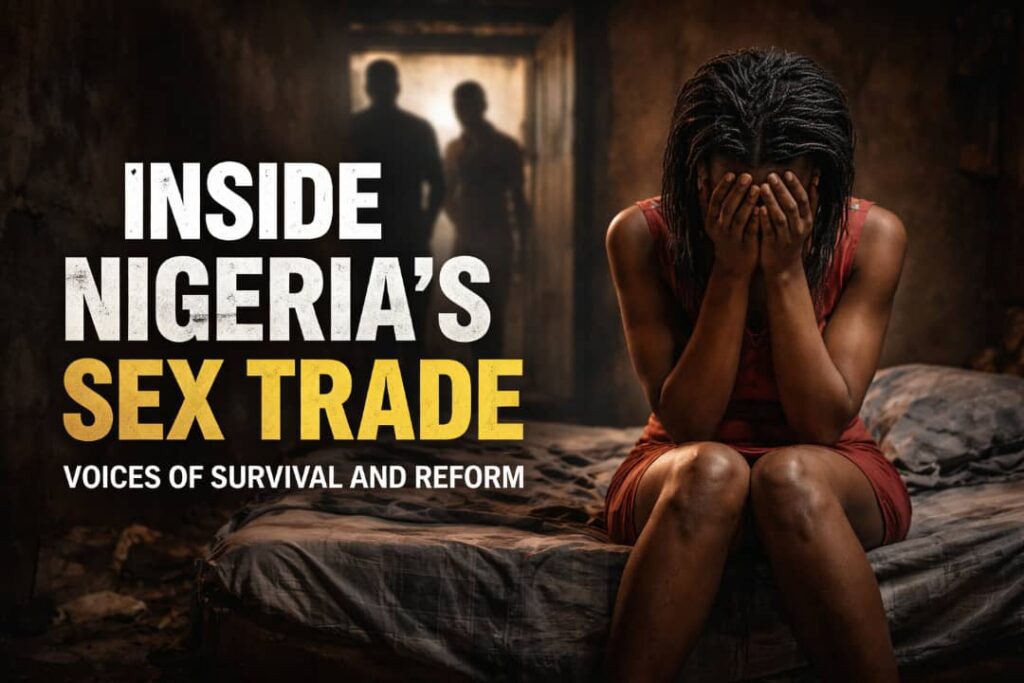






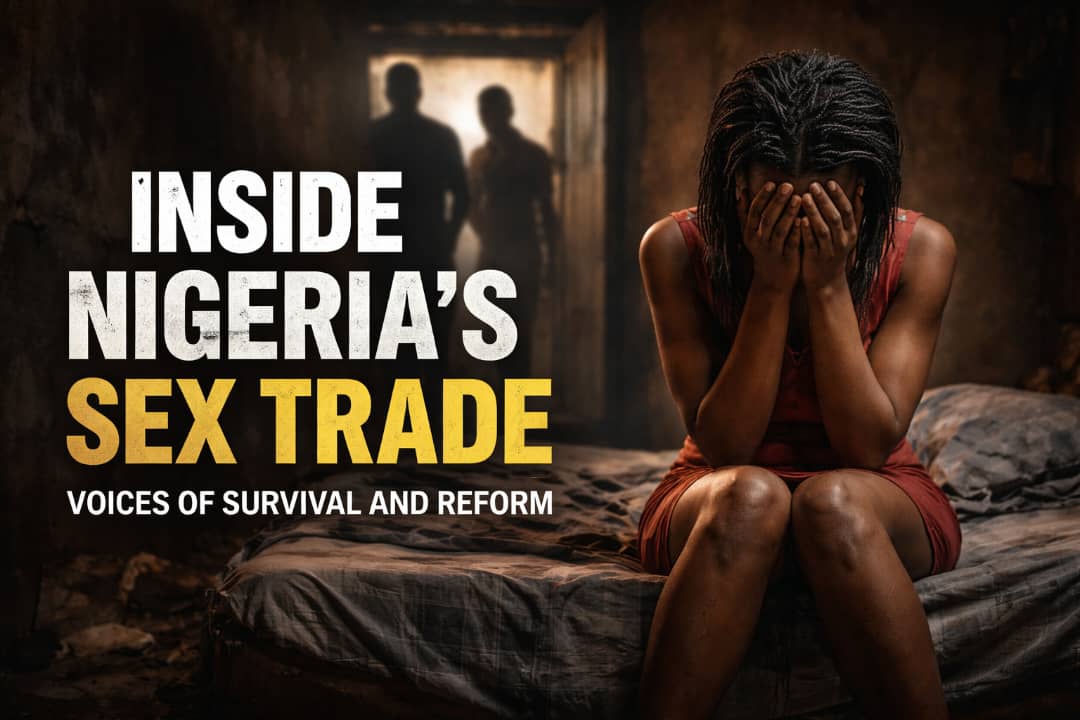
An Investigative Legal Study Written from the Field
Lorem Ipsum has been the industry’s standard dummy text ever since the 1500s.
By F. J. Jude, Esq, a Nigerian Legal Scholar, Investigator, and Lawyer
A Nudge
Ladies and gentlemen,
I write to you not only as a scholar and a lawyer, but as someone who has walked into places most people would rather pretend do not exist. For over five years, I risked myself, I humbled myself, I exposed myself to fear, to shame, to danger, all to understand why young women in our country are pushed into prostitution.
What I have seen, what I have felt, and what I have heard, is both painful and urgent. These women are not criminals by nature. They are survivors of systems that have failed them. They are daughters, sisters, mothers who have been abandoned by society, betrayed by men, and often betrayed by women they should have been able to trust.
Our law, as it stands, punishes the visible, the vulnerable, and the desperate. The police arrest them, hold them in cells, and then some exploit the very women they are meant to protect. The law punishes survival while the real culprits, the buyers, the traffickers, those who create the demand, walk free and unscathed.
And the society that surrounds them? We are self-righteous. We are selfish. We are hypocritical. We demand morality in public, yet when it comes to action, when it comes to real intervention, we turn away. As the Igbo proverb says, when people carry a stranger’s corpse, it is like carrying a bundle of firewood. When suffering is not ours, it does not matter. We condemn evil, yet we do nothing to stop it. Justice is only convenient when it does not disturb our comfort.
These women need revival, not judgment. They need healing before repentance, and they need us to see them not as sinners, but as human beings who have been forced to survive in impossible circumstances. Many were betrayed. Many were violated. Many were left with no choice but to sell themselves to live another day. And yet, even in the depths of that pain, many wish for a way out, for a chance to rebuild, for a life that restores their dignity.
Our role, as lawyers, scholars, policymakers, religious leaders, and fellow human beings, is to stand with them. To protect them. To challenge the buyers. To dismantle the systems that exploit them. And to teach society that true justice is not comfort, it is courage. True morality is not condemnation, it is action.
There is a truth that many refuse to see. Some women enter prostitution not because they want to, not because they are idle, or immoral, but because they are responding to trauma. Trauma that gnaws at the soul. Trauma that isolates, humiliates, and suffocates. They cope with guilt, with shame, with loss, just as some men cope with the emptiness of life through womanising, just as some turn to alcohol or other escapes. These are not voluntary choices in the sense of freedom, they are responses to unbearable pressure.
We often look at a prostitute and see only the transaction. We judge her. We condemn. We forget that there is a mirror to this act; a man who seeks, who pays, who indulges. The difference is only who gains and who loses in the exchange of money. One collects, one pays. Both act under the weight of need, desire, and sometimes despair. Both are equally responsible in action, yet society sees only the woman as guilty.
Consider a woman who has lost someone she loved because she could not raise money in time. She punishes herself. She feels guilt heavier than any burden a society could place on her. And in that weight of despair, she does what she once resisted with every fibre of her being. She surrenders, not because she is weak, but because trauma and guilt have cornered her into survival. She enters a world she swore she would never touch, a world she hates, but which offers the only escape from herself and her shame.
If we are to speak of justice, of morality, of reform, we must understand this. We cannot punish trauma with further punishment. We cannot condemn a coping mechanism when the mind is broken, the heart is heavy, and the options have been stolen. True reform begins with understanding. True justice begins with empathy. True action begins with healing, not blame.
Ladies and gentlemen, the women who survive through prostitution under these circumstances are not failures. They are human beings in pain, navigating a world that has failed them at every turn. To ignore their trauma, to focus only on their visibility, is not justice. It is cruelty.
Let us remember that a single woman saved is worth more than a ninety-nine who resist saving. Let us remember that healing, protection, and justice are not abstract ideals. They are a responsibility that falls on each of us.
If we fail them, history will judge us not by our words, but by our silence. And that is a judgement we cannot escape.
Thank you.
This research was not written from a desk, a library, or a distance of comfort. It was written from risk. From fear. From embarrassment. From moments where I questioned my safety, my dignity, and at times my identity. For more than five years, I placed myself deliberately in compromising situations, not out of recklessness, but out of commitment. I wanted to understand prostitution not as a theory, but as a lived reality.
Author’s Note and Personal Position
There were moments when I felt I was losing who I was. Moments when I wanted to stop. Moments when shame and danger sat in the same room with me. But the desire to unravel this mystery first hand kept me going. I believed that if I turned back, the silence would win again.
My dream since childhood has been to become a lawyer. Not a lawyer by title alone, but a lawyer with a difference. To me, law is not the end. It is a means. A platform to push change. I have always wanted to combine the discipline of law with the instincts of a detective and the courage of investigative journalism. This research is the proof that it is possible to become all three in one body.
This work is emotional because the truth is emotional. It is human because the people involved are human. It is uncomfortable because injustice is uncomfortable.
Abstract
This article examines the root causes pushing young women into prostitution in Nigeria through a multidisciplinary approach that combines law, sociology, psychology, religion, economics, and first hand investigative experience. Drawing from over five years of field interaction, personal social experiments, interviews with prostitutes, traffickers, buyers, religious leaders, law enforcement officers, and ordinary citizens, as well as a structured survey, this research challenges the dominant narrative that places blame primarily on the seller.
The central finding is clear. The prostitute is not the core problem. The buyer and the distributor are.
This study argues that criminalising prostitution without criminalising patronage worsens rape, kidnapping, coercion, and trafficking. It proposes a shift in Nigerian legal policy toward criminalising buyers and traffickers more severely, discouraging womanising culture, strengthening consent enforcement, and investing in rehabilitation and prevention.
Methodology
This research employed the following methods over a period exceeding five years.
- Participant observation through disguised social interaction.
- Structured and unstructured interviews with women in prostitution.
- Controlled social experiments where the researcher presented as a woman in extreme need.
- Interviews with male buyers and intermediaries.
- Informal interviews with law enforcement officers.
- Religious consultations with Christian and Islamic leaders.
- A survey conducted across multiple Nigerian states.
- Legal analysis of Nigerian statutes and case law.
Ethical risks were high. Emotional toll was severe. Safety protocols were informal but deliberate. The goal was truth.
Defining Prostitution in the Nigerian Context
Prostitution in Nigeria is not a single phenomenon. It exists in multiple forms.
Street based survival sex. Brothel based commercial sex. Campus sex work. Transactional sex disguised as relationships. Cross border trafficking. Online escorting.
The law often collapses all these realities into one word and one punishment. That collapse is dangerous.
Nigerian Law on Prostitution
Under Nigerian law, prostitution occupies an uneven legal position.
In Southern Nigeria, prostitution itself is not expressly criminalised, but related acts such as brothel keeping, procurement, and public solicitation are offences under the Criminal Code.
In Northern Nigeria, under Sharia based penal codes, prostitution and adultery attract severe punishments.
What is consistent across Nigeria is this: the buyer is rarely punished.
The seller is visible. The buyer is invisible.
This imbalance shapes everything.
The Core Finding: The Seller Is Not the Problem
After years of observation, interaction, and risk, one conclusion stood firm.
The seller is not the engine of prostitution.
The buyer is. The distributor is.
If prostitution must be curbed, the buyers must be eliminated.
If there is no one to sell to, selling ends. If there is no profit, distribution collapses.
As long as desperate buyers exist, sellers will appear against all risks and odds.
Demand and Consequence
When the seller is forced out while buyers and distributors remain, the result is not morality. It is violence.
Buyers resort to force. Rape increases. Distributors become more desperate. Kidnapping increases.
This is not theory. It is history.
Where demand exists, supply always finds a way.
This is why drug trafficking survives severe penalties. Prostitution follows the same economic logic.
Personal Field Encounters with Buyers
During this investigation, I encountered several brazen men. Men of status. Men of means. Men with families. Men with religious titles.
I feigned interest in transactions to observe their minds.
What I found was disturbing.
These men were not seeking willing partners. They were seeking leverage.
They targeted fear. They targeted hunger. They targeted desperation.
Pressure was constant.
Sex in exchange for intervention. Sex in exchange for protection. Sex in exchange for debt relief.
Consent was treated as a nuisance.
Social Experiment: Asking Women for Help
I tested another question.
How much sympathy do women have for women in deep suffering?
I presented myself as a woman in extreme need.
Debt with evidence. Fear for my life with evidence. Hunger and starvation.
The response shocked me.
Mockery. Dismissal. Accusations of laziness. Claims of entitlement.
In many cases, the women were harsher than the men.
This finding deserves its own chapter because it challenges comfortable assumptions.
When Men Responded
From men, help came with conditions.
Sexual access. Sexual promises. Sexual availability.
Intervention was not charity. It was transaction.
This is how many women slide into prostitution without ever planning to.
The Psychology of Hopeless Survival
Many prostitutes are not intentional professionals.
They are survivors who failed at suicide.
Hopelessness is not loud. It is quiet.
When survival becomes the only goal, morality becomes a luxury.
Voices from the Field
A 19 Year Old from Edo State
“I did not want this life. I just did not want to die.”
A 27 Year Old University Graduate
“Once you start, people treat you like you are already lost.”
A Brothel Madam
“Men blame the girls but they come every night.”
Choice Versus Coercion
This research does not deny that some women choose prostitution from scratch.
Some seek quick money. Some seek soft life. Some enjoy the power.
But choice must be separated from volume.
The majority are not here by desire.
Resignation and Self Stigma
Many women want to leave as soon as something better appears.
Others stay because they feel too dirty to leave.
Shame becomes a prison.
Religion and Moral Responsibility
Christian doctrine condemns sexual exploitation. Islamic doctrine condemns coercion and injustice.
Both place heavier blame on those who exploit vulnerability.
Survey Findings
A structured survey involving respondents across multiple Nigerian states revealed the following patterns.
Majority blamed poverty. A significant number blamed men. Very few blamed traffickers despite evidence.
Public understanding is misdirected.
Legal Recommendation
Criminalise patronage. Increase penalties for traffickers. Strengthen consent enforcement. Discourage womanising culture.
Rehabilitation and Intervention
Empowerment saves lives.
Each woman saved is worth more than a hundred who resist saving.
Interim Conclusion
This research is not an attack. It is a mirror.
If Nigeria wants change, it must look at the right faces.
Part Two
Historical and Structural Roots of Prostitution in Nigeria
Pre Colonial and Communal Context
Before colonial disruption, most Nigerian societies did not recognise prostitution as an organised trade in the modern sense. Sexual relations were regulated through kinship systems, age grades, marriage customs, and communal accountability. While moral failures existed, there was social containment. A woman in distress was absorbed by extended family. A man who exploited women faced communal shame and sanctions.
Sex was not commercialised at scale because survival itself was communal.
The collapse of this structure laid the first foundation for what we see today.
Colonial Disruption and Urban Displacement
Colonial rule altered labour patterns, land ownership, and family cohesion. Men migrated to cities for work. Women were left behind without protection or economic access. Urban centres became anonymous spaces where accountability weakened.
With anonymity came exploitation.
Women who followed men into cities often arrived without skills, networks, or legal protection. Survival sex emerged quietly. Not as choice, but as necessity.
Post Independence Economic Fracture
Nigeria’s post independence years carried promise, but economic instability, corruption, and policy failures gradually eroded opportunity.
Structural Adjustment Programs reduced social welfare. Education became expensive. Jobs became scarce.
Poverty feminised itself.
Young women became economic shock absorbers for families.
Poverty Is Not the Whole Truth
Poverty alone does not explain prostitution.
If poverty were the sole cause, all poor women would be prostitutes. They are not.
Poverty becomes decisive only when combined with vulnerability, isolation, pressure, and demand.
The missing variable is exploitation.
Family Breakdown and Silent Abandonment
One of the strongest predictors discovered during this research was family breakdown.
Not loud violence. Silent abandonment.
Fathers who disappeared. Mothers overwhelmed. Relatives who grew tired.
Many women did not run away. They were slowly pushed out.
Once emotional support dies, economic exploitation becomes easy.
Education Without Protection
Several prostitutes interviewed had secondary education. Many had tertiary education.
Education did not protect them because it did not translate to opportunity.
Degrees without jobs become liabilities.
Shame increases. Desperation deepens.
Men sense this and apply pressure.
Traffickers as Organised Distributors
Traffickers are not accidental villains. They are organised.
They recruit through trust.
Friends. Relatives. Church members. Social media contacts.
Promises are specific.
Jobs. Travel. Education.
Debt bondage follows.
Consent becomes meaningless under threat.
The Buyer’s Psychology
The buyer is often invisible in law and discourse.
Yet he is the engine.
From field interaction, several traits were common.
Sense of entitlement. Sexual boredom. Desire for control. Fear of rejection by equals.
Prostitution offers power without accountability.
Womanising as a Cultural Disease
Womanising is socially tolerated.
Men boast. Friends applaud. Religion often stays silent.
This culture normalises sexual access without responsibility.
When free access fails, paid access follows.
When paid access fails, force follows.
Consent and the Nigerian Reality
Consent in Nigerian society is poorly understood.
Economic pressure distorts willingness.
A hungry person saying yes is not free.
Law must recognise this.
Field Account: A Simulated Plea for Rescue
In one controlled interaction, I presented documented evidence of threat to life and debt.
Women responded with suspicion and ridicule.
Men responded with solutions tied to sexual availability.
This pattern repeated across locations.
Internalised Misogyny Among Women
Many women police other women harshly.
Suffering is treated as moral failure.
This cruelty accelerates descent into prostitution.
Suicide That Failed
Several prostitutes described attempted suicide.
Prostitution followed survival.
They did not choose life. Life chose them harshly.
Early Exposure to Sexual Exploitation
Childhood abuse appeared repeatedly.
Boundaries destroyed early are hard to rebuild.
Religion as Both Shield and Silence
Religion offers moral clarity but often fails in protection.
Judgment is louder than rescue.
Case Narrative: A University Student
A final year student lost sponsorship.
A lecturer offered help for sex.
She refused.
A friend introduced a buyer.
The slide was quick.
Legal Blind Spots
Buyers are rarely arrested.
Traffickers hide behind victims.
Law enforcement lacks victim training.
Comparative Insight
Countries that criminalise buyers reduce trafficking.
Punishing sellers alone increases violence.
Interim Conclusion
Prostitution is not a moral failure of women.
It is a system built on demand, silence, and exploitation.
Part Three
Nigerian Law, Legal Failure, and the Case for Buyer Criminalisation
The Legal Question
The legal question is not whether prostitution exists in Nigeria. It does. The real legal question is this.
Why does Nigerian law consistently punish the visible victim while protecting the invisible consumer?
This section examines Nigerian statutory law, enforcement culture, judicial attitude, and moral reasoning. It shows how current law unintentionally fuels rape, trafficking, and coercion. It then presents a corrective legal path rooted in Nigerian realities.
The Criminal Code in Southern Nigeria
Under the Criminal Code applicable in Southern Nigeria, prostitution itself is not directly criminalised. However, the law criminalises related acts such as brothel keeping, procurement, living on the earnings of prostitution, and public solicitation.
This creates a legal illusion.
The seller becomes the primary target because she is visible.
The buyer remains legally untouched because the law assumes him to be a private actor rather than a public harm.
This assumption is flawed.
The Penal Code and Sharia Based Laws in Northern Nigeria
In Northern Nigeria, the Penal Code and Sharia based laws criminalise prostitution, adultery, and related sexual conduct more directly.
Punishment is severe.
Yet even here, enforcement disproportionately affects women.
Male patrons rarely face equivalent scrutiny.
The moral weight of law is applied selectively.
The Legal Invisibility of the Buyer
Across Nigeria, there is no serious offence titled purchasing sexual access.
This absence is not neutral.
It communicates social permission.
It tells men that demand is acceptable while supply is shameful.
This legal silence sustains the market.
Living on the Earnings of Prostitution
This offence is often misapplied.
Instead of targeting traffickers, it is used against poor relatives, cohabiting partners, or even children dependent on women in prostitution.
The real distributors operate through distance and intimidation.
Law enforcement rarely reaches them.
Police Practice and Street Level Reality
Interviews with officers revealed patterns.
Women are arrested to meet quotas.
Men negotiate quietly.
Extortion replaces justice.
This environment trains women to distrust the law.
Consent Under Economic Duress
Nigerian law treats consent as verbal agreement.
This research demonstrates that economic pressure nullifies freedom.
A woman choosing between sex and starvation is not exercising choice.
Law must evolve to recognise coercive context.
Case Review: Informal Justice
Several cases never reach court.
Families settle.
Victims disappear.
Buyers return to routine.
The cycle continues.
Comparative Legal Insight
Jurisdictions that criminalise buyers rather than sellers show reduction in trafficking and violence.
The logic is simple.
Remove profit.
Demand collapses.
Distribution follows.
Why Criminalising Sellers Increases Violence
When sellers are hunted while buyers roam free, three outcomes follow.
Rape increases because free access replaces paid access.
Kidnapping increases because traffickers must secure supply.
Violence increases because negotiation disappears.
Law must not create more harm than it cures.
Womanising and Legal Silence
Womanising is not merely moral failure.
It is a public harm.
It trains entitlement.
It normalises pressure.
Law currently ignores this behavioural pipeline.
Proposed Legal Reform
- Create a specific offence of purchasing sexual access.
- Increase penalties for trafficking and procurement.
- Mandate rehabilitation rather than imprisonment for sellers.
- Train law enforcement on economic coercion and consent.
- Protect whistleblowers and vulnerable witnesses.
These reforms align with Nigerian values of dignity and justice.
Religious Jurisprudence and Legal Morality
Christian doctrine condemns exploitation of the weak.
Islamic jurisprudence condemns injustice and coercion.
Both place heavier blame on the oppressor than the oppressed.
Law should reflect moral clarity.
Voices from the Bench and Bar
A senior lawyer stated.
“We punish survival and excuse appetite.”
A magistrate admitted.
“The law gives us no tool to punish the buyer.”
Survey Data Interpretation
Respondents overwhelmingly supported rehabilitation for women.
Support dropped when buyer punishment was proposed.
This reflects cultural discomfort, not justice.
Ethical Duty of the Legal Profession
Lawyers are not neutral observers.
They are architects of consequence.
Silence is participation.
Interim Conclusion
Nigerian law does not fail by accident.
It fails by omission.
Until the buyer is named, demand will rule.
Part Four
The Human Mind Behind Prostitution
Law explains structure. Economics explains pressure. Psychology explains persistence.
This part examines the minds involved. The buyer. The trafficker. The woman who wants out. The woman who stays. The woman who entered by choice. The society that watches.
Nothing here is speculative. Everything is drawn from repeated interaction, observation, and recorded testimony gathered over several years.
The Buyer’s Inner World
The buyer is often imagined as a man seeking pleasure. That description is incomplete.
Most buyers encountered during this research were not driven primarily by desire. They were driven by power.
Key psychological traits repeatedly observed included:
Fear of rejection by women of equal status. Resentment toward female autonomy. Entitlement to access. Emotional immaturity masked by money.
Prostitution offered them a space where consent could be pressured, negotiated, or ignored.
Pressure as a Sexual Tool
Buyers rarely asked directly.
They hinted. They delayed help. They increased emotional stress.
The goal was not sex alone. It was surrender.
A woman agreeing under fear confirmed dominance.
The Trafficker’s Psychology
Traffickers displayed clear patterns.
They separated conscience from action. They used language of opportunity. They blamed victims for outcomes.
Many saw themselves as business people, not criminals.
Empathy was replaced with efficiency.
Recruitment Through Trust
Trafficking rarely begins with violence.
It begins with familiarity.
Friends. Relatives. Neighbours.
Trust lowered resistance.
Debt sealed captivity.
The Woman Who Wants Out
A large group of women expressed one dominant desire.
Escape.
They monitored opportunities constantly.
A job. A sponsor. A safe relocation.
Many said they would leave immediately if dignity was restored.
The Weight of Shame
Shame was heavier than money.
Many women believed they no longer deserved normal life.
This belief kept them trapped more effectively than force.
The Woman Who Has Resigned
Another group had stopped hoping.
They did not defend prostitution.
They defended survival.
Resignation replaced resistance.
The Woman Who Entered by Choice
A smaller but visible group entered prostitution deliberately.
Motives included:
Quick wealth. Material lifestyle. Control over men.
This group should not be used to erase the suffering majority.
Policy must be nuanced.
Internal Conflict Among Women
Women in prostitution often judged each other harshly.
Those who entered by choice dismissed those who were coerced.
Those who were coerced resented those who enjoyed it.
Division weakened collective escape.
Female Hostility Toward Female Suffering
One of the most painful findings of this research was female cruelty toward desperate women.
Suffering was labelled laziness.
Requests for help were treated as manipulation.
This hostility often pushed women toward male predators.
Field Account: Rejected Pleas
When I presented documented evidence of danger and debt to women, responses included laughter, suspicion, and moral lectures.
No alternatives were offered.
The door closed.
Men as Conditional Rescuers
Men offered solutions with conditions.
Sex. Silence. Availability.
Help was never free.
The Illusion of Consent
Repeated exposure to pressure trains compliance.
What appears as willingness is often exhaustion.
Law must learn this language.
Trauma Bonding
Some women developed attachment to buyers or traffickers.
Kindness after cruelty created loyalty.
This psychological trap was powerful.
Early Sexual Boundary Damage
Many women described childhood abuse.
Early violation distorted adult negotiation.
Boundaries once broken are harder to enforce.
Survival Identity
Prostitution reshaped identity.
A woman became what kept her alive.
Leaving meant facing a self she no longer recognised.
Society’s Role
Society consumed the service.
Society condemned the provider.
This contradiction sustained the system.
Interim Conclusion
Prostitution persists not because women lack morals.
It persists because power exploits vulnerability.
Until minds change alongside laws, reform will be partial.
Part Five
Religion, Moral Injury, and the Forgotten Pathway into Prostitution
Religion is often invoked in conversations about prostitution, but rarely examined honestly.
This section addresses two neglected realities.
First, the moral responsibility of religious institutions. Second, the ignored pathway of women who entered prostitution after rape or deep sexual betrayal.
Both are central to understanding why prostitution persists and why rescue often fails.
Prostitution as Consolation After Violation
One of the most silenced findings of this research was this.
A significant number of women did not enter prostitution from hunger or ambition, but from injury.
Rape. Sexual coercion. Betrayal by trusted partners.
For these women, prostitution became consolation.
Not pleasure. Not freedom.
Control.
The Psychology of Taking Back Control
After sexual violation, many women experience a collapse of ownership over their bodies.
Sex no longer feels sacred.
It feels stolen.
Some women attempt to reclaim control by deciding the terms themselves.
Who. When. For what price.
In their words.
“If it will happen anyway, let it benefit me.”
From Shame to Strategy
Shame is not passive.
It pushes.
Many victims described feeling already ruined.
Prostitution then felt like alignment with an identity already imposed on them.
A coping mechanism became a lifestyle.
Paid Versus Unpaid Violation
Several women articulated a painful logic.
“I was violated for free.”
“Now at least I am paid.”
This belief did not bring healing.
It brought numbness.
But numbness felt safer than memory.
Sexual Betrayal Within Relationships
Not all injuries came from strangers.
Some came from lovers.
Men who promised marriage. Men who disappeared after intimacy. Men who exposed women publicly.
The emotional collapse mirrored rape trauma.
Trust died.
Religion and the Weight of Purity
Religious spaces often responded to violation with silence or blame.
Questions about clothing. Questions about location. Questions about obedience.
Rarely questions about justice.
Victims internalised guilt.
When Religion Fails the Injured
Several women reported approaching religious leaders after rape.
Responses included:
Prayer without protection. Forgiveness without accountability. Silence to avoid scandal.
This abandonment pushed women away from moral community.
Moral Injury and Spiritual Dislocation
Moral injury occurs when a person’s core beliefs are shattered by betrayal.
Many women lost faith in God, men, and society simultaneously.
Prostitution filled the vacuum with structure.
Religious Doctrine Versus Religious Practice
Christian scripture condemns exploitation of the vulnerable.
Islamic jurisprudence prioritises protection of dignity and justice.
Yet practice often contradicts doctrine.
Judgment replaced shelter.
Voices from Faith Leaders
A pastor admitted.
“We preach purity but we do not know how to heal the violated.”
An imam stated.
“Shame should never silence justice.”
Case Narrative: After the Assault
A young woman was raped by a neighbour.
Her family discouraged reporting.
Her church advised prayer.
She entered prostitution six months later.
Not for money.
For numbness.
Prostitution as Emotional Anaesthesia
Repeated sexual exposure dulled pain.
Feeling became optional.
This emotional shutdown was mistaken for strength.
Why Rescue Is Rejected
Some women resisted rescue efforts.
Leaving prostitution meant reopening wounds.
Staying felt safer.
The Cost of Ignoring This Pathway
Policies that treat prostitution as purely economic miss this group entirely.
Rehabilitation without trauma care fails.
The Role Religion Could Play
Religion has unique tools.
Community. Meaning. Forgiveness with justice.
When used well, it can heal.
Interim Conclusion
Prostitution is sometimes chosen not for gain, but to survive injury.
Any serious reform must recognise this truth.
Part Six
Rehabilitation, Prevention, and the Architecture of Real Change
After diagnosis must come remedy.
This section addresses what can actually work in Nigeria, not in theory, not in imported models, but in lived reality.
Rescue without rehabilitation fails. Rehabilitation without prevention repeats. Prevention without justice is hypocrisy.
All three must exist together.
First Principle: Not Every Woman Needs the Same Intervention
One of the gravest policy errors is treating all prostitutes as one category.
This research identified at least five distinct groups.
- Women forced through trafficking and debt bondage.
- Women pushed by hunger and family collapse.
- Women coping after rape or sexual betrayal.
- Women who want out but feel trapped by shame.
- Women who entered deliberately for material gain.
A single solution cannot serve all.
Trauma First, Skills Second
Many rehabilitation programs fail because they reverse the order.
They teach tailoring to broken minds.
Trauma untreated resurfaces.
Effective rehabilitation must begin with:
Safety. Stability. Psychological care.
Only then skills.
Dignity Based Support
Charity framed as pity reinforces shame.
Support must be framed as restoration.
Women must not feel rescued from filth, but restored to worth.
Confidential Exit Channels
Many women want to leave quietly.
Public rescue invites stigma.
Anonymous exit channels reduce fear.
Legal Protection During Transition
Leaving prostitution exposes women to danger.
Traffickers retaliate.
Buyers threaten.
Temporary legal protection and relocation are essential.
Economic Reintegration That Works
Jobs must be realistic.
Market relevant.
Immediate income reduces relapse.
Micro grants without mentoring fail.
Community Re Entry
Reintegration is social, not just economic.
Religious institutions can help if judgment is suspended.
Community silence is protection.
Prevention Begins Earlier Than Assumed
Prevention does not start at brothels.
It starts at schools.
At homes.
At moments of first abandonment.
Early Warning Signs Identified
Repeated indicators observed included:
Sudden loss of sponsorship. Unreported sexual assault. Family eviction. Migration without support.
Intervening here saves lives.
Discouraging Womanising Culture
Public campaigns rarely address male behaviour.
Womanising must be named as harmful.
Not celebrated.
Social consequences must exist.
Criminalising Patronage in Practice
Buyer criminalisation must be visible.
Quiet enforcement fails.
Public accountability deters demand.
Training Law Enforcement
Police must understand coercion.
Arresting women is not success.
Protecting them is.
Religious Institutions as First Responders
Places of worship are often first points of disclosure.
Leaders need training in trauma response.
Prayer must not replace justice.
Funding Without Exploitation
Aid must not become another industry feeding on suffering.
Transparency is essential.
Measuring Success Correctly
Success is not numbers rescued.
It is lives stabilised.
One woman saved outweighs statistics.
Resistance to Reform
Some oppose rehabilitation.
Some profit from silence.
Change threatens comfort.
This resistance must be expected.
Case Narrative: A Successful Exit
A woman left prostitution through anonymous relocation and skill training.
Five years later she employs others.
Her identity remains protected.
Why Prevention Is Cheaper Than Policing
Rescue costs more than early support.
Justice delayed multiplies harm.
Interim Conclusion
Real change requires patience, honesty, and courage.
There is no shortcut.
But there is hope.
Part Seven
Final Synthesis, Moral Reckoning, and a Personal Legal Commitment
Every serious investigation must eventually stop asking questions and begin telling the truth plainly.
This final part brings together law, psychology, religion, economics, and lived experience into one coherent moral conclusion. It also returns to where this work began, with risk, vulnerability, and a personal commitment to justice.
What This Research Has Proven
After more than five years of investigation, interaction, and exposure, several truths stand firm.
Prostitution in Nigeria is largely not a product of laziness.
It is not driven primarily by moral collapse.
It is sustained by demand.
It is distributed through organised exploitation.
It survives because society punishes visibility instead of responsibility.
The Seller, the Buyer, and the Distributor Revisited
The seller is visible.
The buyer is protected.
The distributor is hidden.
Law, culture, and religion have aligned, often unintentionally, to preserve this imbalance.
Until this alignment is broken, reform will fail.
The Cost of Misplaced Blame
Blaming women achieves nothing.
It does not reduce prostitution.
It increases danger.
It fuels rape.
It strengthens traffickers.
A system that punishes survival while excusing appetite is not moral. It is cruel.
Demand as the Central Engine
Where there is demand, supply will appear.
This is not ideology. It is observable fact.
Suppressing sellers while ignoring buyers does not end prostitution. It mutates it into something more violent.
Rape, Coercion, and the Continuum of Exploitation
This research confirms a continuum.
Womanising normalises pressure.
Paid sex normalises transaction.
Coerced sex normalises force.
These are not separate worlds.
They feed each other.
The Ignored Voices
Women who entered prostitution after rape.
Women who entered after betrayal.
Women who entered after abandonment.
Their silence has distorted policy.
Their stories correct it.
Religion Reconsidered
Religion is not the enemy of reform.
Silence is.
Judgment without shelter is violence by neglect.
Doctrine demands protection of the vulnerable.
Practice must catch up.
Law as a Moral Instrument
Law does more than punish.
It teaches.
When law ignores buyers, it teaches entitlement.
When law punishes women, it teaches shame.
This education must change.
A Call to Nigerian Lawmakers
Criminalise patronage.
Increase penalties for trafficking.
Mandate rehabilitation.
Protect victims.
Silence has cost enough lives.
A Call to Law Enforcement
Stop measuring success by arrests.
Measure it by protection.
The badge should not be feared by the vulnerable.
A Call to Religious Leaders
Be first responders, not moral commentators.
Shelter before sermon.
Justice before forgiveness.
A Call to Men
Sexual access is not entitlement.
Desire does not justify pressure.
If demand ends, exploitation collapses.
A Call to Women
Cruelty to suffering women strengthens predators.
Solidarity saves lives.
A Personal Closing
This research cost me comfort.
It exposed me to risk.
It placed me in humiliating and compromising situations.
There were moments I felt myself slipping away.
I wanted to stop.
I wanted to forget what I had seen.
But I could not.
Because silence is how systems survive.
Becoming a Lawyer With a Difference
My childhood dream of becoming a lawyer was never about titles.
It was about impact.
Law is a platform.
Not an end.
This work is my proof of concept.
That law can meet investigation.
That justice can meet truth.
That one voice can disrupt silence.
On Hope
Hope is not optimism.
Hope is work.
It is choosing to intervene even when resistance is loud.
It is believing that saving one woman matters more than approval.
Final Conclusion
Prostitution in Nigeria will not end by punishing women.
It will end when demand is confronted.
When exploitation is named.
When injury is healed.
When law remembers who it is meant to serve.
This research stands as testimony.
And as challenge.
Research Highlight
Summary
This research examines the factors pushing young women into prostitution in Nigeria through a multidisciplinary legal lens. Drawing on over five years of first hand investigative fieldwork, structured social experiments, interviews, surveys, and doctrinal legal analysis, the study challenges the dominant assumption that prostitutes are the primary drivers of the sex trade. The central argument advanced is that prostitution in Nigeria is sustained not by the seller, but by demand from buyers and the organised distribution networks of traffickers. The research demonstrates that criminalising sellers while leaving buyers legally invisible increases rape, coercion, and trafficking. It further reveals neglected pathways into prostitution, including post rape coping, sexual betrayal, moral injury, and social abandonment. The research proposes a reorientation of Nigerian law toward criminalising patronage, strengthening trafficking penalties, recognising economic coercion as a defect of consent, and prioritising rehabilitation over punishment. The work concludes that meaningful reform must integrate law, psychology, religion, and social intervention to address both prevention and recovery.
Introduction and Background
This study investigates what pushes young women into prostitution in Nigeria and why legal responses have failed to curb the practice. Existing discourse often frames prostitution as a moral failure or economic choice, focusing punitive attention on women while leaving buyers and traffickers largely unexamined. This research argues that such framing is legally and socially defective.
The motivation for this research is both scholarly and personal. The author undertook prolonged field investigation that involved significant personal risk, emotional strain, and ethical exposure. The objective was to understand prostitution as a lived reality rather than an abstract concept. The author’s long held ambition to practise law as a tool for social change, rather than an end in itself, informed the investigative approach, combining legal analysis with investigative journalism and social inquiry.
The central research questions are:
- What structural, psychological, and legal factors push young women into prostitution in Nigeria.
- Whether Nigerian law disproportionately targets sellers while shielding buyers.
- Whether criminalising patronage would more effectively reduce exploitation.
- How rehabilitation and prevention can be legally and socially structured.
Methodology and Ethical Considerations
The research employed qualitative and observational methods over a period exceeding five years. These included participant observation, disguised social interaction, interviews with women in prostitution, buyers, traffickers, religious leaders, and law enforcement officers, as well as structured social experiments simulating extreme vulnerability. A survey was also conducted across multiple Nigerian states.
Ethical risks were significant. The author adopted strict confidentiality measures, avoided entrapment, and prioritised personal safety. The methodology prioritised truth over comfort, acknowledging emotional and psychological costs.
Historical and Social Context of Prostitution in Nigeria
This research traces prostitution from pre colonial communal systems through colonial disruption, urbanisation, and post independence economic fracture. It demonstrates how family breakdown, education without opportunity, migration, and silent abandonment create vulnerability exploited by traffickers and buyers. Poverty is shown to be a contributing factor, not a sufficient explanation.
Nigerian Legal Framework and Enforcement Failures
This research analyses the Criminal Code, Penal Code, and Sharia based provisions governing prostitution related offences. It demonstrates how sellers are disproportionately targeted while buyers remain legally invisible. Police practice, extortion, and enforcement culture further entrench this imbalance. The research argues that Nigerian law fails by omission, particularly in its failure to criminalise the purchase of sexual access and to recognise economic coercion as a defect of consent.
Psychology of Demand, Exploitation, and Survival
This research examines the psychological profiles of buyers, traffickers, and women in prostitution. It identifies entitlement, power seeking, and emotional immaturity among buyers, and efficiency driven moral detachment among traffickers. It also analyses survival psychology, shame, resignation, voluntary entry, trauma bonding, and early sexual boundary damage among women, demonstrating that prostitution often functions as a survival identity rather than a choice.
Religion, Moral Injury, and Social Silence
This research explores the role of religion as both potential shield and silent accomplice. It examines how purity culture, victim blaming, and institutional silence following rape or betrayal contribute to moral injury and social exile. It contrasts religious doctrine with practice, showing how failure to protect the violated pushes some women toward prostitution as consolation, control, or emotional anaesthesia.
Findings, Discussion, and Policy Implications
The core findings of this thesis are that prostitution in Nigeria is sustained by demand, that criminalising sellers increases violence, and that buyer invisibility perpetuates exploitation. The research discusses how womanising culture normalises pressure, how legal silence educates entitlement, and how rehabilitation must be trauma informed. Policy implications include buyer criminalisation, strengthened trafficking penalties, consent reform, and institutional coordination.
Recommendations and Conclusion
This research recommends the criminalisation of patronage, enhanced penalties for traffickers, rehabilitation rather than punishment for sellers, confidential exit mechanisms, and early intervention strategies. It concludes that prostitution will not end by punishing women, but by confronting demand, healing injury, and restoring the moral purpose of law.
Statement of Originality
I hereby declare that this research is my original work. It has not been submitted, in whole or in part, for any degree or qualification in any institution. All ideas, data, observations, analyses, and conclusions presented in this research are the result of my own independent investigation conducted over a period exceeding five years.
This work is based on first hand investigative fieldwork, personal social experiments, interviews, surveys, and legal analysis personally carried out by me.
This research represents a genuine attempt to contribute original knowledge to the study of prostitution, sexual exploitation, and legal reform in Nigeria. The perspectives advanced, particularly the focus on demand, buyer criminalisation, post trauma pathways into prostitution, and the integration of law with investigative inquiry, are the product of my own intellectual effort and lived research experience.
I affirm that this work was written in my own words, reflects my own reasoning, and complies with academic standards of honesty and integrity.
Signed:
F. J. Jude, Esq
Date:
29th December, 2025