

JudeEsq













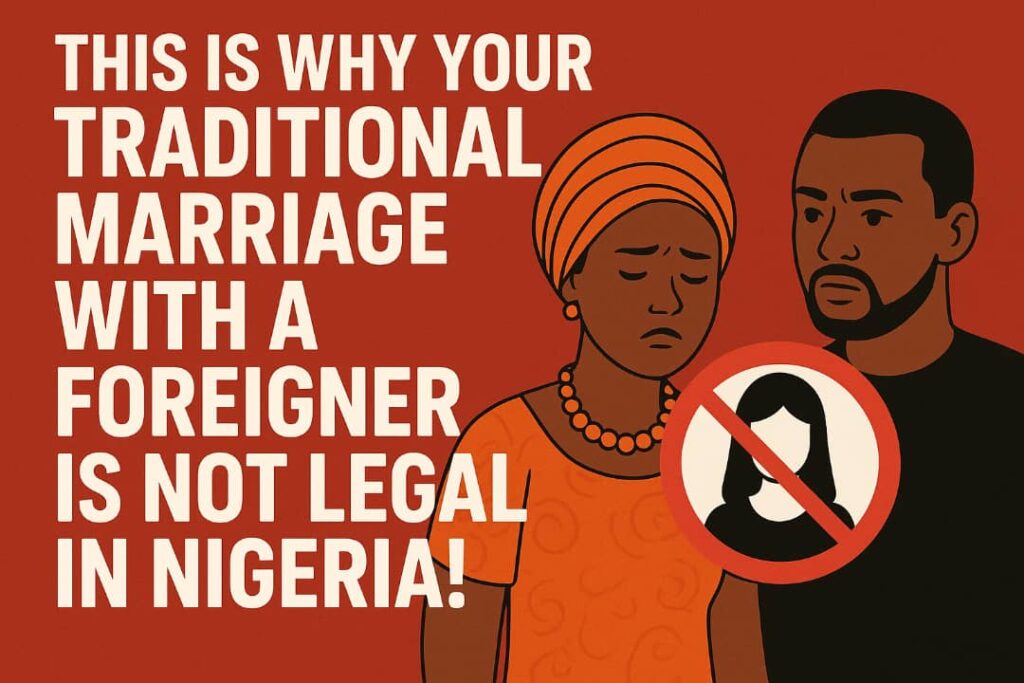




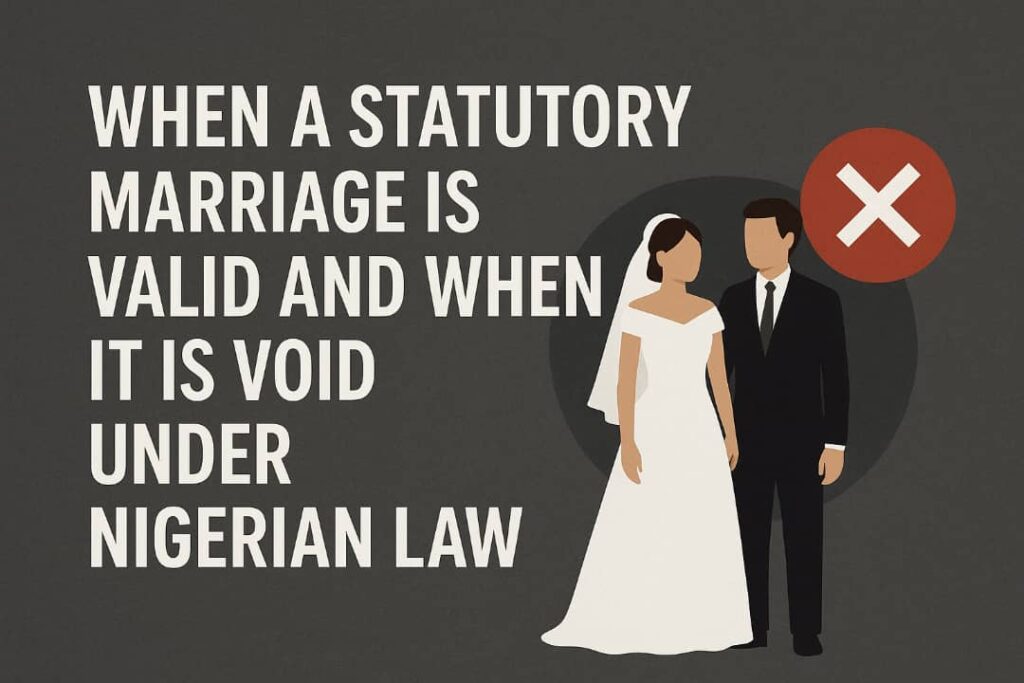

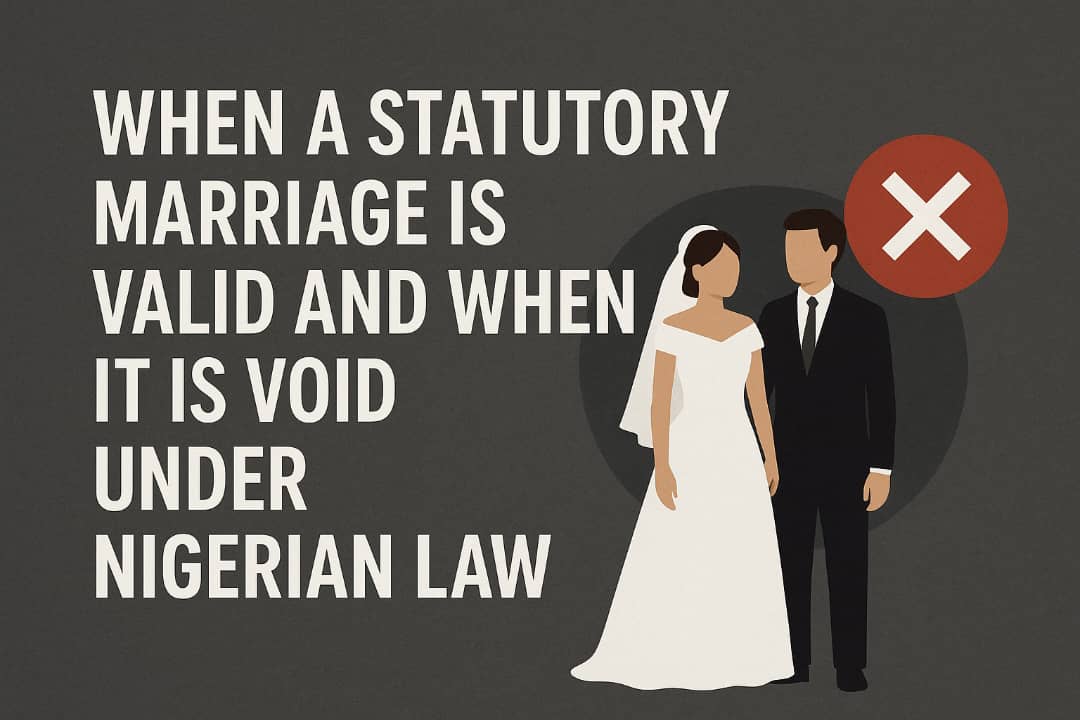
Many family disputes, heartbreaks, bigamy cases, and invalid marriages in Nigeria come from a simple truth that most people do not fully understand. Not every marriage you see in society is legally recognised. Two people may live together for fifty years, have children, host ceremonies, wear matching outfits, and still be regarded in law as unmarried. On the other hand, two people may sign certain documents in a licensed church building and instantly become bound by the strict regime of statutory marriage even without realising it.
To understand why these confusing situations occur, we must begin with the foundation of Nigerian marriage law.
A statutory marriage in Nigeria is governed by the Marriage Act. It is the monogamous type of marriage which recognises only one wife or one husband at a time. Anything outside that becomes a criminal offence known as bigamy.
Section 33 of the Marriage Act is one of the most powerful provisions in Nigerian family law. It states clearly that a statutory marriage is void if either party was already married at the time of the new marriage. This applies whether the previous marriage was statutory, customary, or religious. If it exists and has not been dissolved, a new marriage cannot happen.
This is why every person must understand the legal consequences of their marital status before entering into a new union. Once a marriage under the Act exists, nothing except death or a valid court ordered divorce can free either party to marry again.
WHAT THIS MEANS IN PRACTICAL TERMS
The law is clear, but the implications can be surprising.
One. If he married you first under the Act, no other marriage is possible until he divorces you in court.
A statutory marriage stands alone. If he marries you under the Act whether in a registry or a licensed church you instantly become his only legal wife. If he tries to marry another woman either customarily or statutorily without first obtaining a divorce, that second marriage is void from the start. It does not exist. It has no legal effect. The second woman is not a wife in the eyes of the law. She may have a ceremony, she may bear a ring, she may even have children, but she is legally viewed as a girlfriend.
The only wife is the first statutory wife until a court of competent jurisdiction formally dissolves the marriage.
This is also where bigamy comes in. A man who marries again while a statutory marriage is still subsisting risks criminal prosecution. The woman he purports to marry also risks legal consequences.
Two. If he married you first under customary law, that marriage must be dissolved before he can marry under the Act.
A customary marriage is valid under Nigerian law but it is polygamous in nature. It allows the man to marry more wives, but only if the additional marriages are also customary.
If he married you customarily and wants to marry another woman under the Act, he cannot do so unless he first dissolves the customary marriage by returning the bride price. Until that is done, the customary marriage continues to exist.
If he tries to marry another woman under the Act without first dissolving the customary marriage, the statutory marriage will be null and void. The law will recognise the customary wife as the only lawful wife, and the statutory ceremony will be treated as an invalid event.
Three. If he is already married to someone statutorily, he cannot marry you validly at all until he divorces her.
It does not matter whether he marries you customarily, whether he takes you to his parents, whether he pays your bride price, or whether he introduces you to every elder in the community. A subsisting statutory marriage blocks every attempt at a new marriage.
In this case you are simply a girlfriend. Nothing more. The only solution is for him to obtain a divorce from his statutory wife. Only then can he marry you validly.
This point is important because many women assume that a customary ceremony gives them the position of wife even when the man already has a statutory spouse. It does not. The statutory wife remains the only recognised wife until a court says otherwise.
THE DANGER OF NOT REMARRYING AFTER A DIVORCE
If he divorces his first wife and marries you validly, then you are the lawful wife. But if he divorces his wife and does not marry you and later marries someone else, that other woman becomes the lawful wife. A relationship without a valid marriage ceremony, no matter how long it lasts, does not create a marital status.
Many people have wasted decades assuming they were married when they were not.
THE IMPORTANT EXCEPTIONS
The law makes room for certain exceptions that people often misunderstand.
One. A traditional and a statutory marriage to the same woman is valid.
If a man marries you customarily and later marries you again under the Act, both marriages are valid because they are between the same parties. It is not a new marriage to another person. It is simply an upgrade from a potentially polygamous system to a strictly monogamous one.
Two. A man who marries only customarily is entitled to additional customary wives.
When you accept a purely customary marriage, you are accepting a polygamous system. The man can marry more wives customarily and each wife will be validly recognised. They are not home breakers or side partners. They are legal wives just like you.
This is why many women need to think carefully before agreeing to a purely customary union. If you want a monogamous marriage, you must insist on a marriage under the Act.
THE MISTAKE MANY COUPLES MAKE IN CHURCH
Many Nigerians do not realise that they are statutorily married. This is because some churches are licensed to conduct marriages under the Act. When you fill a form in such a church and the priest signs a certificate recognised by the Marriage Registry, you are entering a statutory marriage whether you understand it or not.
The problem is that some churches have more than one building. Sometimes only one hall is licensed. If you marry in a part of the premises that is not licensed, your marriage may not be statutory, even if the church itself conducts statutory weddings.
Other churches are not licensed at all. No matter the ceremony, songs, or prayers, a statutory marriage cannot occur there.
This creates a situation where some couples spend millions in a wedding, exchange vows, wear rings, dance for hours, and still end up unmarried in the eyes of the law.
WHY YOU MUST ALWAYS CHECK
Before you marry, ask questions:
Is this venue licensed?
Is this certificate recognised under the Marriage Act?
Are we signing a statutory register?
Many people have entered into forms of marriages they did not want. Others believe they are married but, unknown to them, they have no valid marriage under the law. Some have lived for decades as husband and wife but are legally unmarried partners.
Ignorance does not protect anyone. The consequences can be severe. It affects inheritance, property, the validity of future marriages, and even the legitimacy of children under some customary systems.
THE SIMPLE TRUTH
A statutory marriage binds you strictly.
A customary marriage allows polygamy.
A statutory marriage cannot coexist with another marriage.
A customary marriage must be properly dissolved before a statutory marriage can follow.
A church wedding is only statutory if the venue is licensed and the proper forms are signed.
The law is clear.
The consequences are real.
Your decisions matter.
Be properly informed.
Ask questions before you marry.
Understand the type of marriage you are entering into and how it binds you.
Ignorance of the law is never an excuse.
